
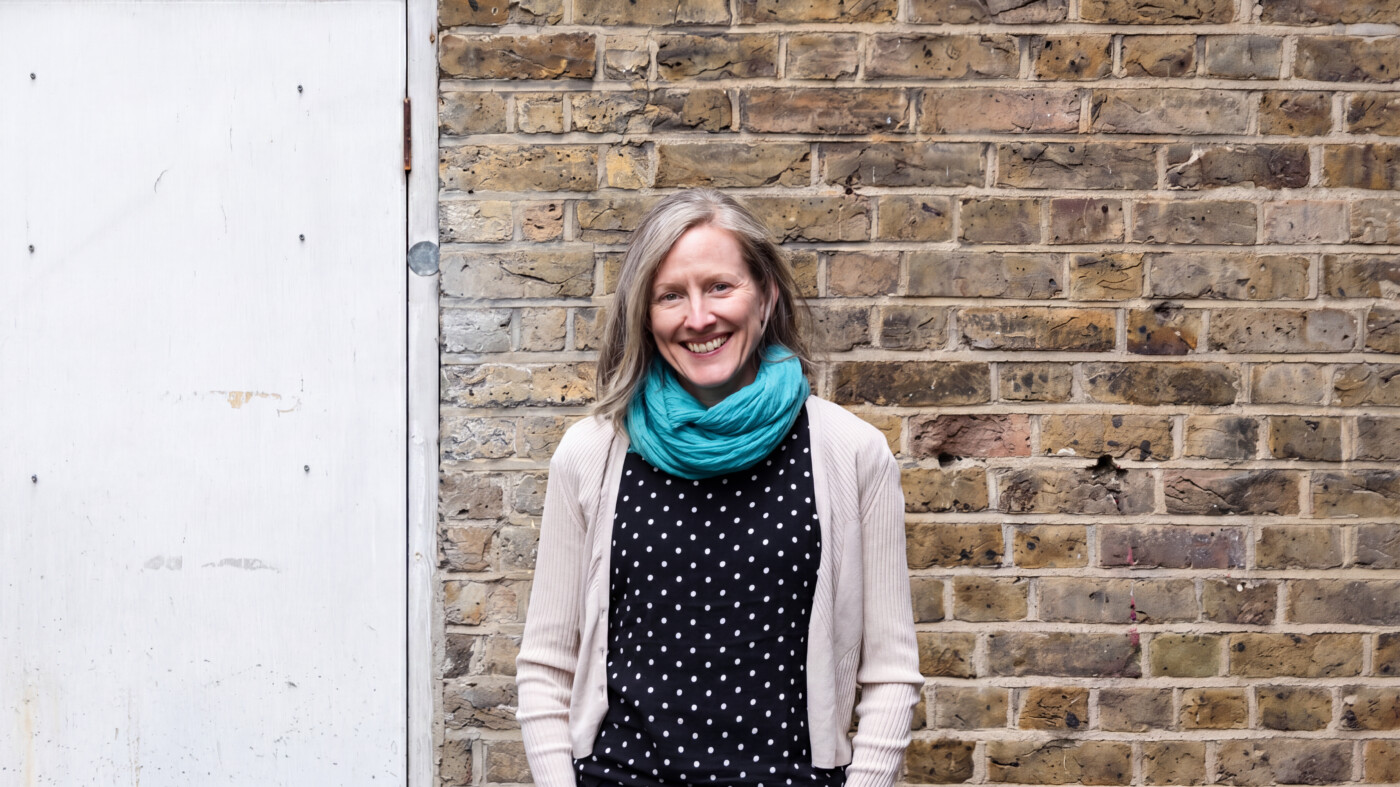
Can you tell us about your background and career so far?
I graduated in 2000 in Graphic Design & Illustration with De Montfort University, where I became fascinated with telling visual stories through type. After a few short spells working with retail designers, art-houses and printers, I found my niche working alongside architects as an in-house graphic designer. I became fascinated by the idea of contributing toward more permanent, large-scale physical installations within ‘real’ places.
In the mid-‘00s, I had the opportunity to work remotely on a project in Hong Kong, which led to a full-time relocation. What was originally meant to be ‘just for a couple of years’, became my home until the end of last summer!
My skills continued to emphasise environmental graphics, and onward to leading graphic teams of wayfinding and signage designers. I feel incredibly lucky to have explored Asia, whilst working alongside multidisciplinary, multicultural teams, on a broad variety of project scales and sectors. A career highlight so far, was working with the consultant team delivering ‘The Henderson’ by Zaha Hadid Architects
What does your role as a Project Director involve?
During my interview, one phrase really resonated with me: "representing the client in the room." This will be my guiding goal; connecting the design team and the client, representing both perspectives fairly, and helping to clarify expectations, communication and deliverables. This role brings greater commercial responsibility yet is balanced with opportunities for creative input. I hope to help guide both parties towards strong collaboration and success!
What excites you most about joining the team?
About two years ago I stumbled upon a podcast featuring deeply enthusiastic discussions about anything and everything in the world of wayfinding (go listen to the Wayfinding Xchange!). I remember thinking at the time, "whoa, there really are other people out there who talk about this stuff..."
To now be part of the same team, surrounded by such welcoming, enthusiastic people who are genuinely proud of their craft, feels like such a neat full-circle moment. I'm keen to learn new approaches to project management, openly share ideas and to start developing new partnerships. And excited to be working on amazing projects!
What first sparked your interest in wayfinding?
On reflection, my early fascination with typography, storytelling, 'nerdily' trying to influence hierarchy, and "how eyes track across a page", was the perfect precursor to translating brand experiences into physical environments, just at a different scale. I think most designers in the wayfinding and signage industry never actually planned to be here! Yet the cross-disciplinary collaboration you build with architects, engineers and contractors makes it incredibly satisfying and means you're constantly learning.
For me, good wayfinding creates connection. It keeps us safe, engaged with the world around us, and is a great tangible application of a brand. The spark was probably a realisation that I could contribute to helping people experience physical spaces through my design.
What have you learned over your career that has shaped how you lead projects?
Keep listening and talking. Don't resist resolving tension, and lean into the questions. Even ask the 'stupid' ones!
Collaboration is probably the most important process. Everyone involved helps with the problem solving, which can challenge the status quo and lead to innovation.
Trust in the healthy paranoia. Never make assumptions, double check everything and test/prototype scales. There's nothing worse than seeing something physically built but feeling it could have been better resolved!
What trends or changes are you noticing in the industry currently?
There is a positive shift in how people perceive wayfinding. It isn't a linear experience or only about directions. There are meaningful discussions about how it can functionally add value through efficiencies, be a brand asset or bring stories to life within physical spaces.
Simultaneously, responsible design needs to be front and centre. Any designer involved in the built environment must consider how we can encourage social and environmental interactions, actively consider accessibility and neurodivergent understanding. We must design for product longevity, lifecycle assessment, prioritise sustainable sourcing and mitigate the impacts of global warming.
And, of course, there is AI. We don't know exactly how agentic AI and wearables change human navigation habits, but we can start to predict it. It will likely enable hyper-personalised experiences, yet the counter begs an interesting philosophical question: do we really want our personal journeys to be entirely directed and optimised by an algorithm?
How do you like to spend your time outside of work?
With my family. We try to spend as much time as possible being active outdoors — cycling, running, and exploring. I love being outdoors, I think this was enhanced by the broad biodiversity, jungle trails and hills of Hong Kong. Now that we are back in the UK, I'm looking forward to exploring native woodlands with my son. Oh, and yoga, it's good for the soul!
What are you watching, reading or listening to at the moment?
I recently watched 'The Blue-Eyed Samurai' on Netflix and highly recommend for anyone who appreciates Japanese styling and storytelling.
I'm reading Killian Jornet's 'Above the Clouds' (my running hero!), and I'm excited to share 'The Hobbit' with my son.