




Motionspot's origins
Motionspot's origins came from a direct, personal experience. Over twenty years ago, Ed’s co-founder and friend James Taylor was involved in an accident while on holiday that resulted in a spinal cord injury. As he adapted to life as a wheelchair user, it became clear that many of the environments around him weren’t designed to support independence in the way they should.
That experience prompted a shift in perspective.
“It was his experience, not just of his apartment, but of all the environment around him that made us realise our buildings and spaces just aren’t designed right for everybody and there needed to be a new way of thinking.”
What followed was a different way of looking at design. One that led to the creation of Motionspot and a focus on making inclusivity part of the design process from the outset, rather than something applied later.
Moving beyond the checklist
Inclusive design has made real progress. But in practice, it is still often reduced to a compliance checklist. A set of minimum standards focused on physical access, rather than the full range of human needs.
Regulations have played an important role in setting a baseline, but they are not a measure of quality.
“The reality is, only seven percent of disabled people are wheelchair users. So the work we do is designed for the seven percent, but also the ninety three percent who may have another physical, cognitive, sensory condition. It’s about helping clients and their design teams understand how to go above and beyond those minimum standards.”
Designing to meet standards may result in a compliant building, but it does not necessarily result in one that works best for its users.
The cost of getting it wrong
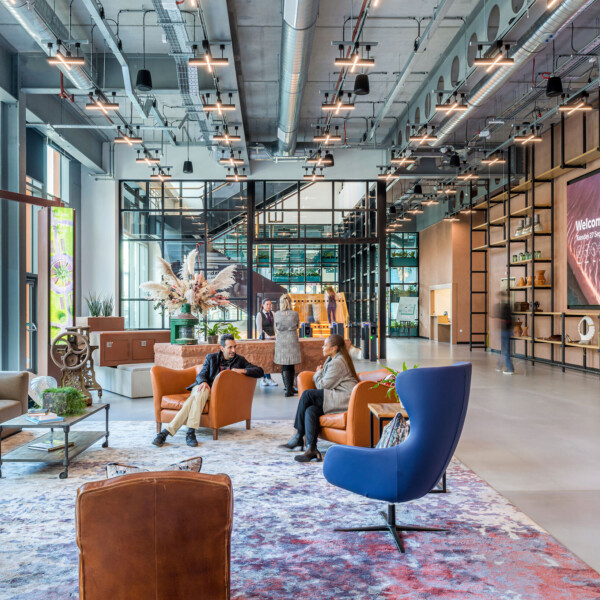
One of the most striking parts of the conversation is the insight Ed shares on the financial case for inclusive design. Motionspot worked with Barclays on a new campus in Glasgow, a development for five thousand employees, a significant portion of which were neurodivergent.
A return on investment analysis after the building opened found that every pound spent on inclusive design during the build, saved one hundred pounds in retrofits and workplace adjustments further down the line.
Separate research found that 22 percent of people with ADHD have declined jobs because the office environment was not designed to suit their needs, and 15 percent have left roles for the same reason. The business case for inclusive design is clear. It sits across recruitment, retention and productivity.
Designing for understanding, not just access
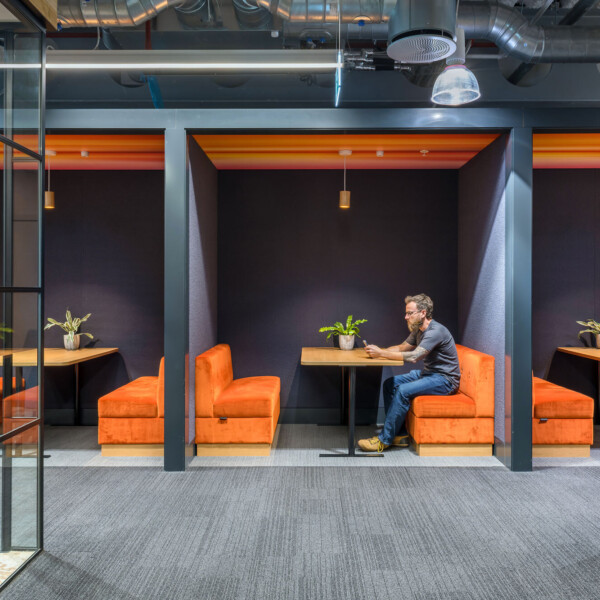
A consistent theme throughout the conversation is that access alone is not enough. Being able to enter a building does not mean being able to understand it and feel confident to navigate it.
This is one of the ways inclusive design and wayfinding begin to overlap. Both are concerned with how people interpret space, and how environments can reduce the effort required to move through them.
When that understanding is clear, movement becomes intuitive. When it isn’t, even simple journeys can become difficult.
What good inclusive design actually looks like
Ed is clear throughout the episode that inclusive design does not require perfection, and that the fear of getting it wrong is often one of the main barriers to progress. What it does require is having the right conversations early on, talking to the people who will use the space, and treating the process as iterative rather than final.
Some of the most effective interventions are small. Changing the contract between a wall and a floor finish. Considering the acoustic levels of hand dryers in a washroom. Providing options for meeting environments for people who need different levels of stimulation. When implemented early, these changes don’t have to add extra costs to a project. They become part of the design, not something applied afterwards.
“The building is only as accessible and inclusive as the people who operate it.”
Setting a new benchmark
The episode ends on a question that Alison puts to Ed: in ten years’ time, what will be look back and realise we got wrong about inclusive design?
His answer is simple. That designing to minimum standards was never enough.
There is no single solution that works for everyone, and there likely never will be. But there is a clear direction forward. Moving away from compliance as the goal, and towards engaging with users to design environments that are more responsive to the needs to the people moving through them.
Or, as Ed puts it, treating inclusive design not as a constraint, but just as part of good design.
“We always say that compliance is the floor. And what we want to do is set a new ceiling.”
Learn more about Motionspot and their services here.
Listen to the episode on Apple
Listen to the episode on Spotify