




Making places memorable
For Chanel, wayfinding is about much more than helping people get from A to B. The things that are different, surprising or personal can become the details that stick in our minds.
“When something is different, unique or surprising, they're more memorable.”
As well as her work in wayfinding and brand experience, Chanel is an artist whose illustrated maps bring together architecture, place and storytelling. Her work often includes hidden details, inside jokes and personal stories, creating something that is specific to the people and places it represents.
“Creating those personal touches makes the map not something that you could buy off the shelf. It's something that's really specific, but also playful.”
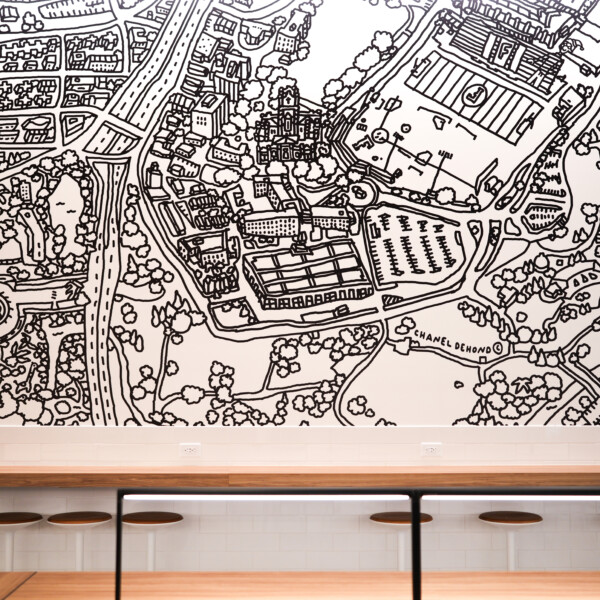
When art becomes part of the wayfinding experience
Chanel's approach to illustration is rooted in making places more approachable and giving people another way to connect with them. Her work doesn't simply reproduce buildings or cityscapes; it draws out the details, stories and associations that make them meaningful.
In the conversation, Chanel talks about creating an illustrated map of the Bronx for Fordham University, incorporating stories from students, staff and people who had been there for decades. Hidden details turned the map into something people could explore and discover for themselves, rather than simply a representation of the place.
It's an approach that challenges the idea that wayfinding needs to be purely functional or serious. Humour, playfulness and personal connection can all help people engage with a place and create memories of it.
From landmarks to mental maps
The conversation explores the visual cues we use to recognise and navigate places, and how buildings can become landmarks through the associations people create around them.
The Gherkin in London is a simple example: its shape became its nickname, and that nickname became part of how people refer to and recognise the building.
But memorable experiences aren't necessarily about visual cues alone. Chanel and Alison discuss the role of language, symbols and the different senses we use to understand our surroundings, from sound and touch to smell.
Experiencing the journey
Technology has made navigation more efficient, but it may also be changing the way we experience a journey.
Chanel reflects on travelling before smartphones, when paper maps, landmarks and getting a little lost were part of the experience. Today, GPS can take us directly to a destination, but the journey itself can become something we barely remember.
“The journey is part of that adventure.”
At the heart of the conversation is the idea that memorable places aren't simply the ones we can navigate most easily. They're the ones that give us something to notice, experience and connect with.
“When you participate in things, the memory is much stronger than when you're actively listening to things.”
Listen to the full episode on: