
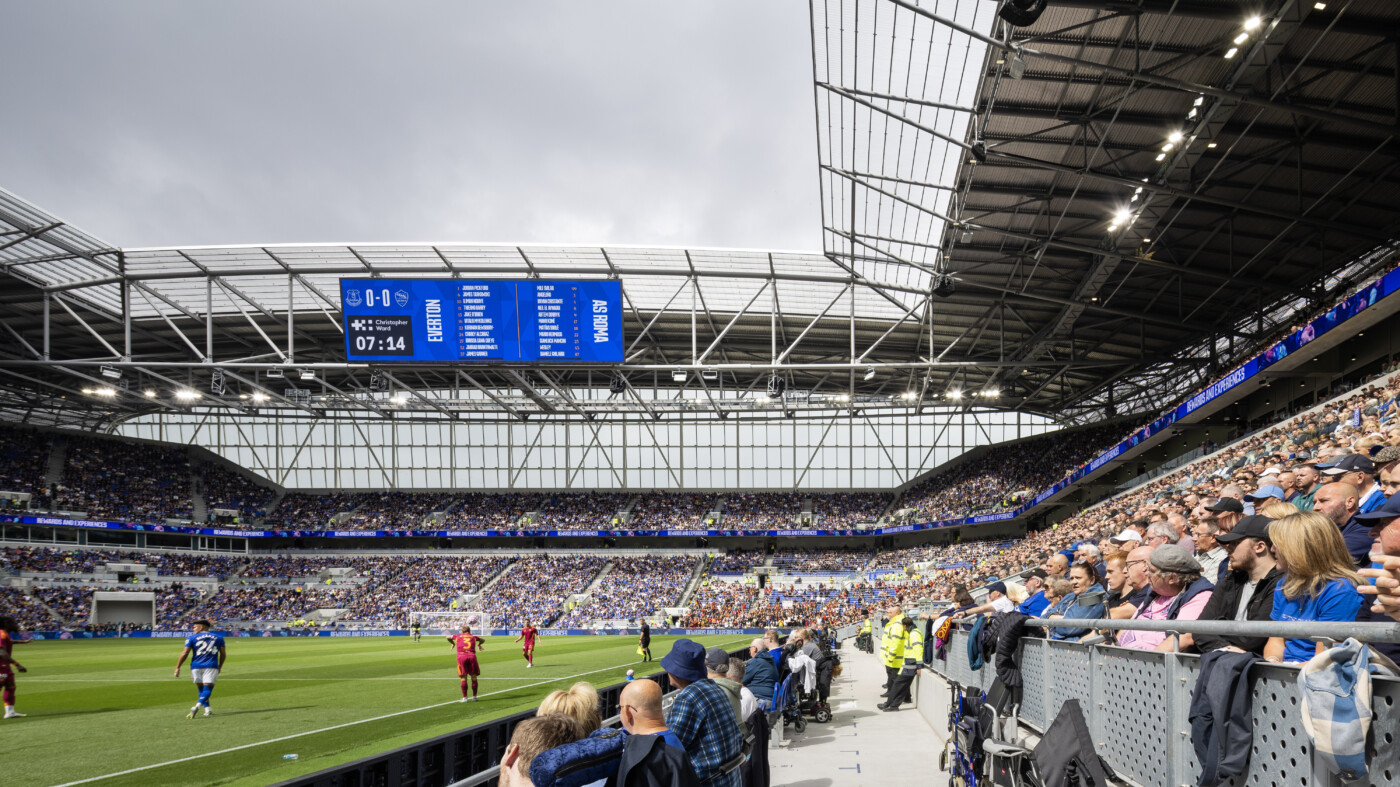
Starting the journey before arrival
The fan experience doesn’t begin at the turnstile. It starts well before supporters reach the stadium.
Clear pre-arrival information helps people feel prepared and confident, reducing uncertainty at what can be one of the busiest points in the journey. Recommended arrival routes, walking times from transport hubs and car parks, gate information and other practical guidance can all help distribute movement before fans even reach the site.
This becomes particularly important when a stadium is dealing with tens of thousands of people arriving within a relatively short window. The wayfinding system needs to connect the information fans receive before arrival with what they encounter on site, creating a continuous journey rather than a series of disconnected instructions.
Creating calm at moments of congestion
Entry points can be among the most pressured parts of the matchday experience. Large crowd volumes, fixed kick-off times and heightened anticipation can quickly lead to congestion when movement is unclear.
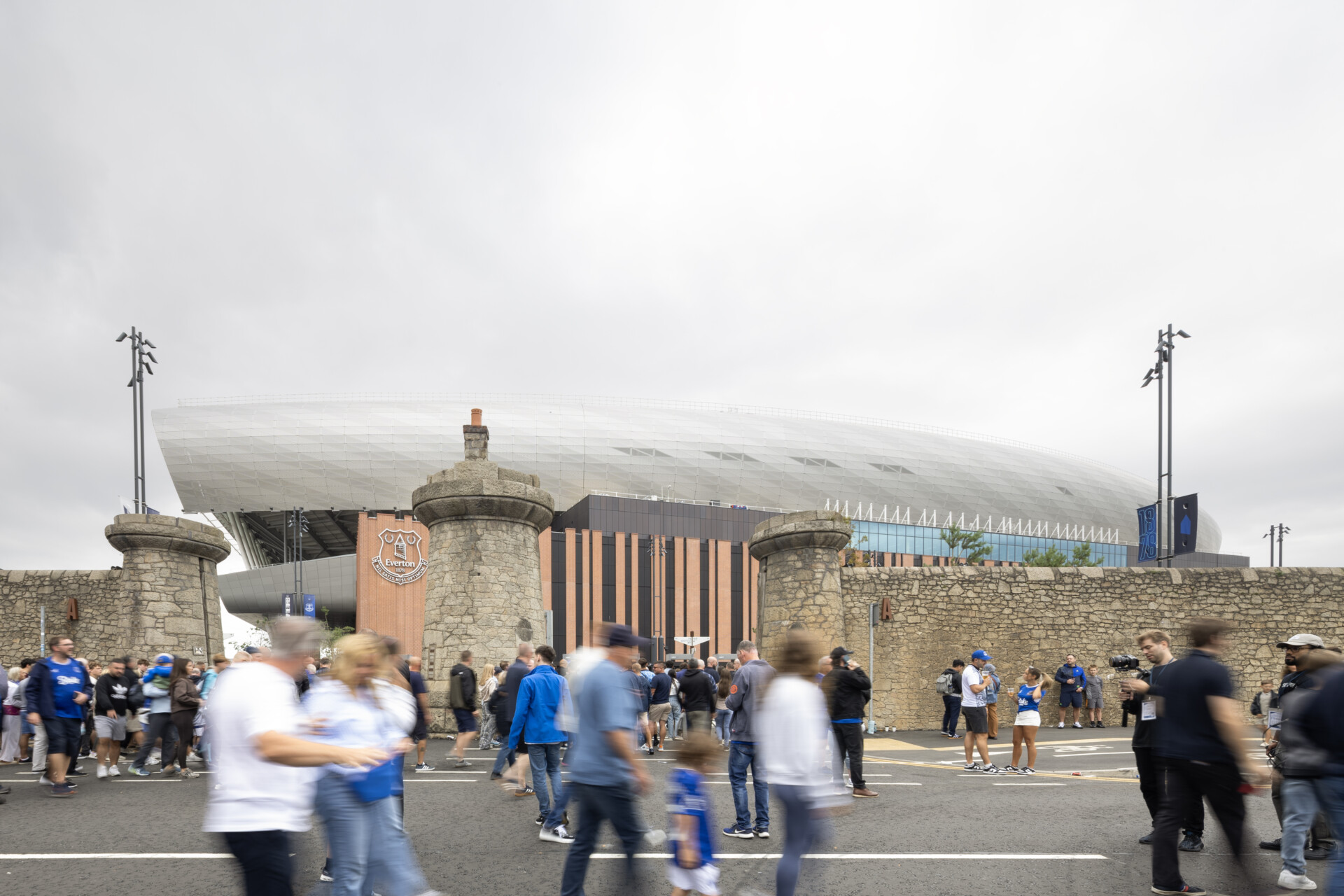
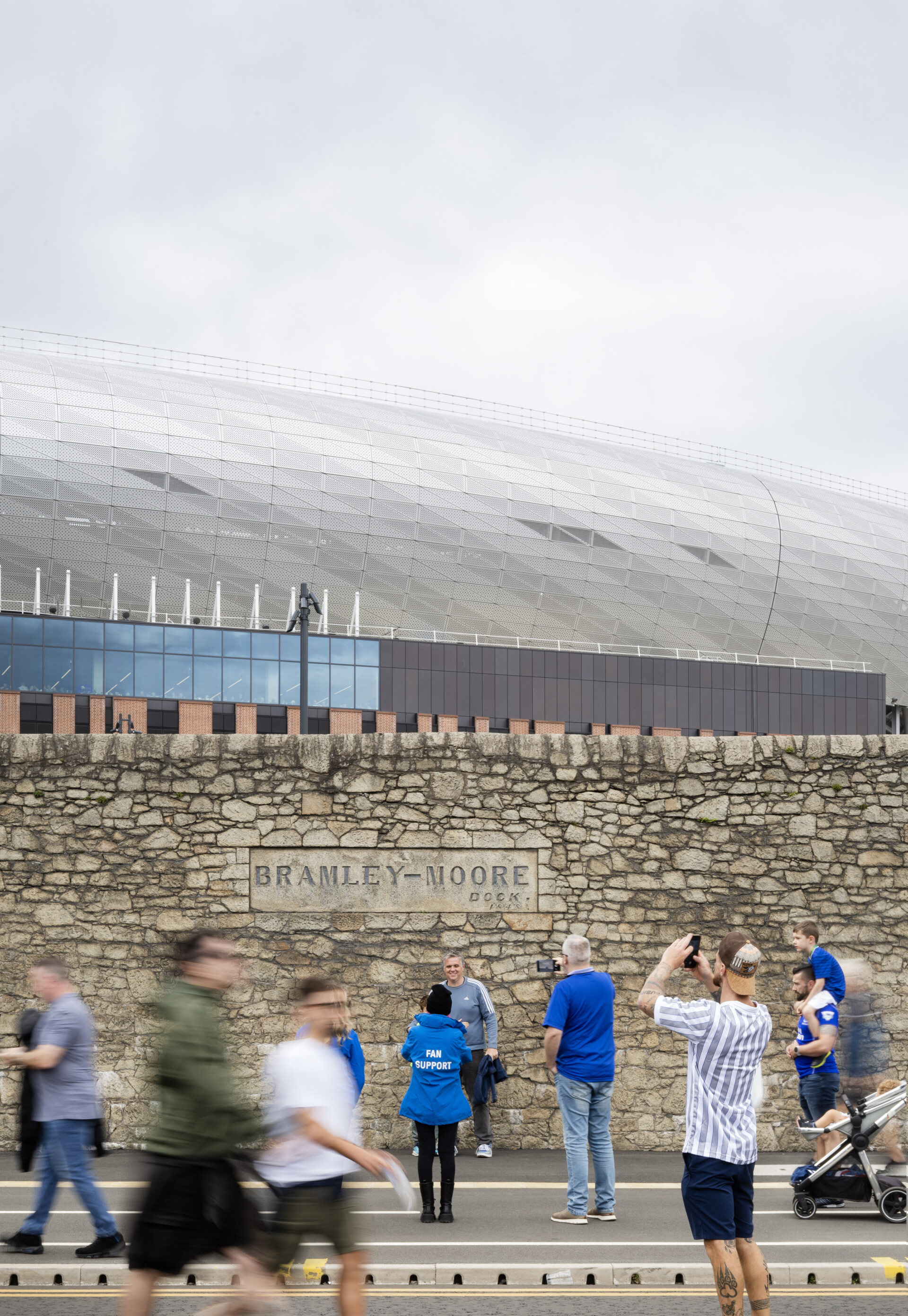
At Hill Dickinson Stadium, the constraints of the site itself helped shape the wayfinding strategy. Set within the historic Bramley-Moore Dock, the stadium is bounded by water on one side and a retained listed dock wall on the other, meaning access into the stadium is concentrated through a series of defined openings.
Endpoint developed a clear coding structure for these entry points, linking them with ticket information and carrying the same logic through the stadium. By giving fans a clear understanding of where they need to go before they arrive and reinforcing that information consistently once they are on site, the system helps reduce hesitation and supports a more natural flow into the stadium.
This is where strategic wayfinding can make a real difference. The objective isn't simply to put up more signs. It is to understand where decisions need to be made, what information people need at each point and how the environment itself can help guide movement.
Consistency and clarity to keep people moving
Once inside, stadiums present another layer of complexity. Fans may need to navigate entrances, concourses, stairs, lifts, toilets, food and drink, retail, hospitality areas and seating, often while moving with thousands of other people.
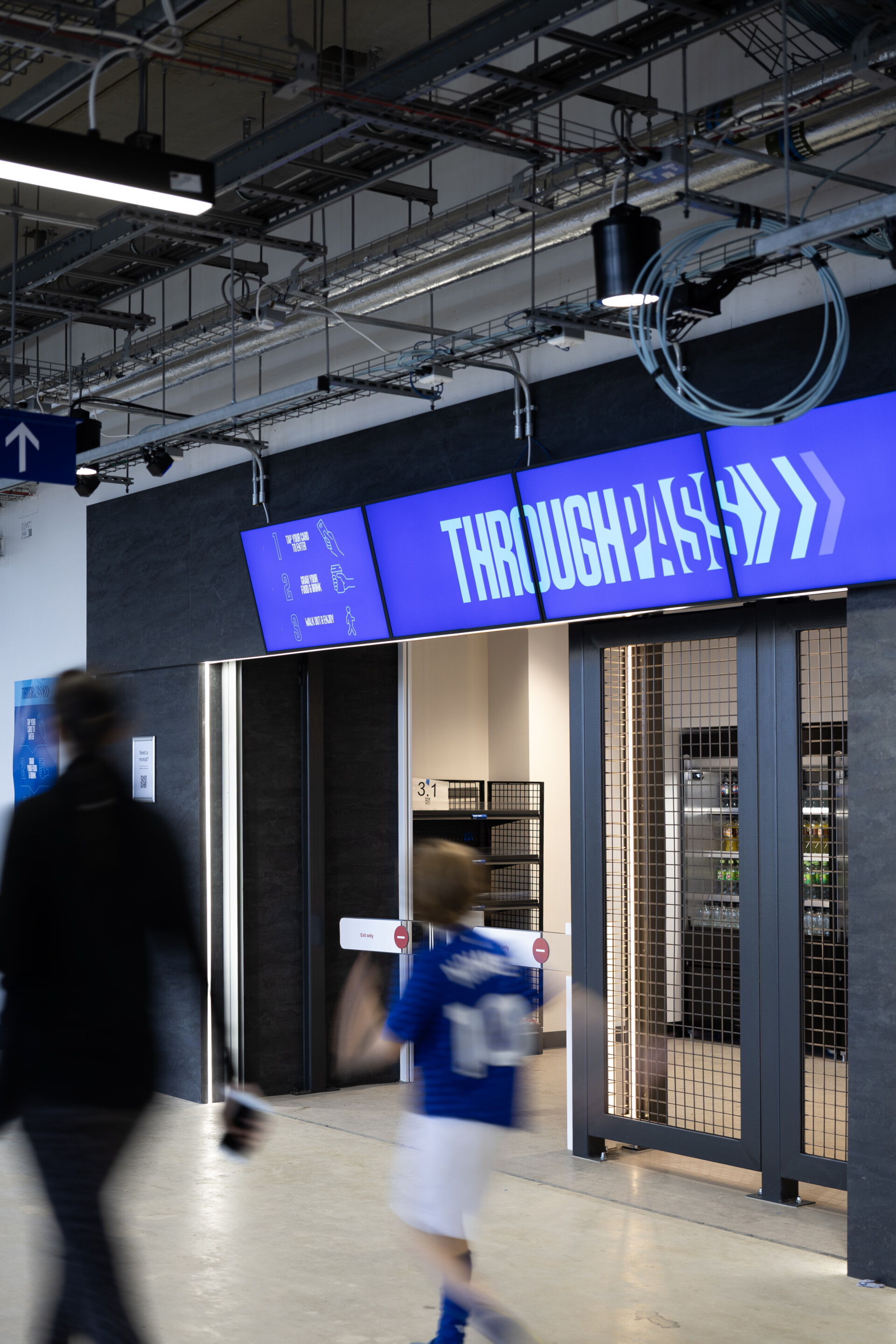
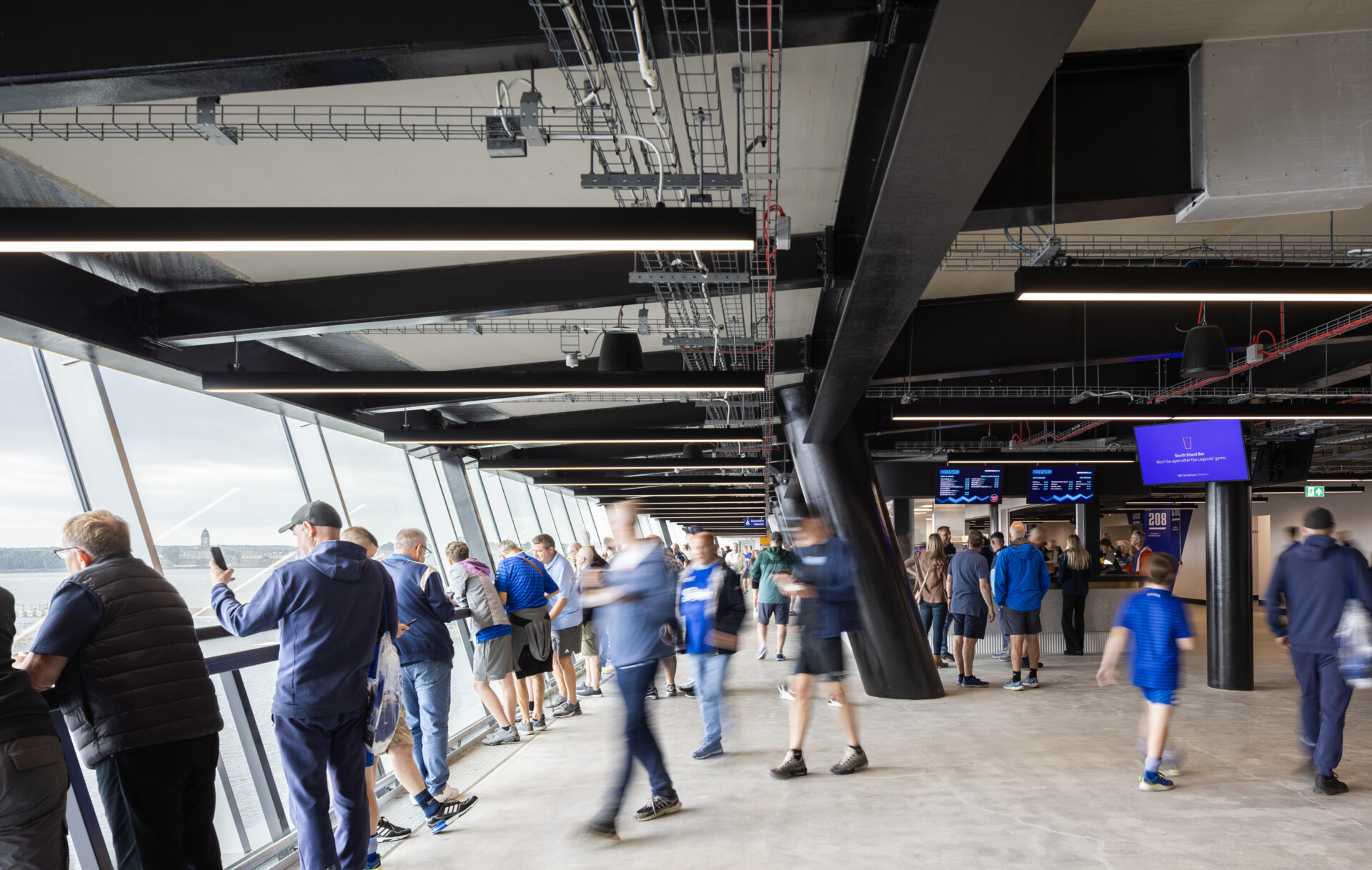
A consistent system of naming, numbering and zoning helps reduce the number of decisions people need to make. For Everton, Endpoint ensured information is layered throughout the environment. Suspended signage provides clear direction above crowd level, while maps are positioned at key decision points to help people orientate themselves when they need more information.
Clear hierarchies, legible typography and carefully considered sightlines allow people to understand their next move without interrupting the flow around them. In a high-energy environment, that sense of confidence is as important as the physical direction itself.
Designing for everyone
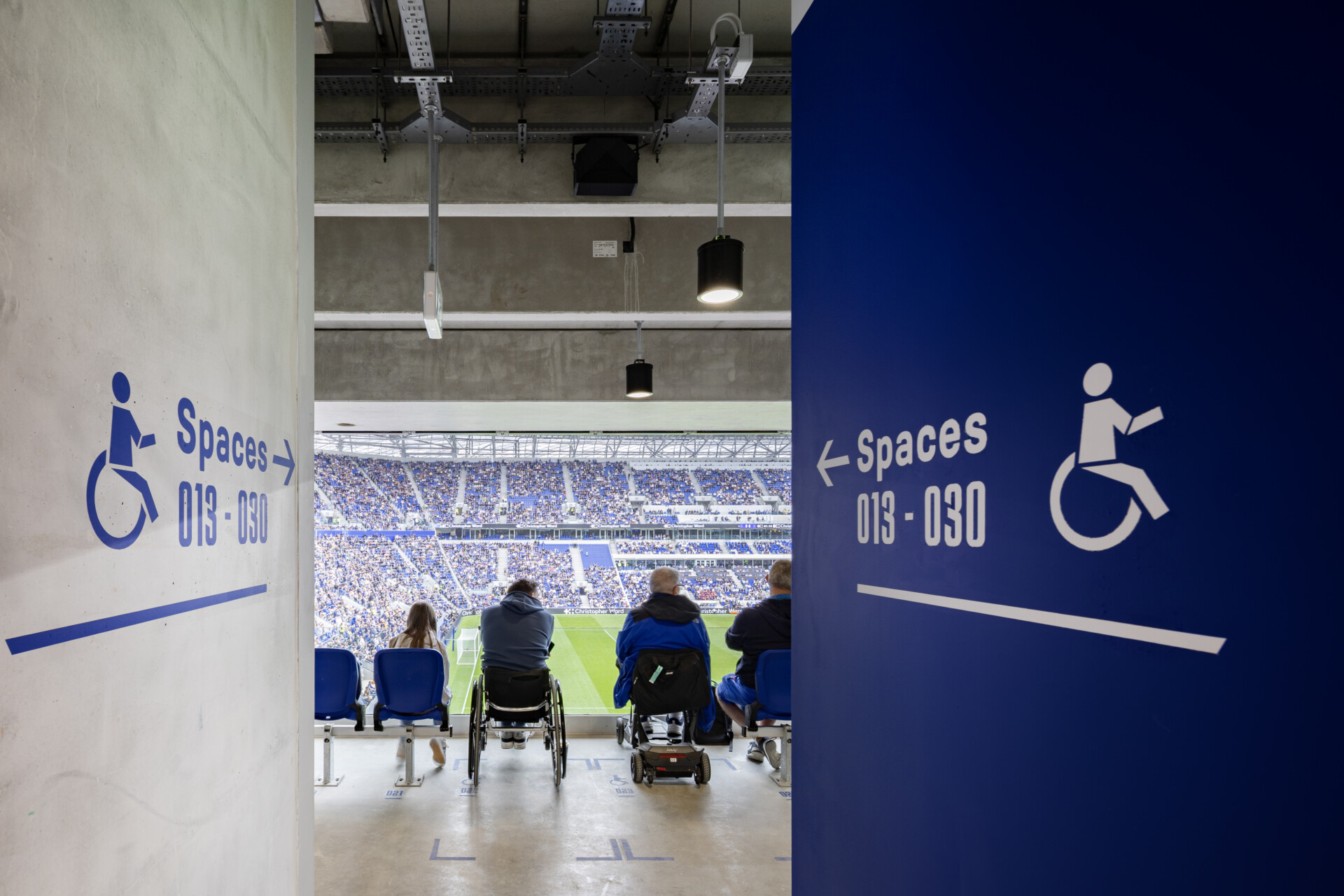
Inclusive wayfinding design is fundamental to effective stadium design. Venues welcome people of all ages, abilities and backgrounds, and navigation systems need to support this diversity without creating separate or overly complicated experiences.
At Hill Dickinson Stadium, accessibility was considered throughout the system, including strong contrast, clear information hierarchies, large-scale typography and clearly signposted sensory spaces.
The same principle applies more broadly. Step-free routes, accessible seating, lifts and other facilities need to be easy to find and integrated into the overall journey. When information is clear and consistent, visitors are better able to navigate independently and confidently.
Supporting more than the match
Modern stadiums rarely serve a single purpose. Alongside matches, they host concerts, events, conferences and community activity, bringing different audiences and patterns of movement into the same environment.
Wayfinding therefore needs to be flexible enough to support different uses without compromising clarity. Clear zoning, consistent naming and adaptable information allow the system to respond to changing audiences and event requirements while maintaining a familiar visual language.
Designing with this flexibility in mind helps a stadium remain intuitive and effective as its programme evolves.
A connected, considered fan experience
The best stadium wayfinding is rarely noticed as a separate design intervention. It works alongside the architecture, operations, digital information and brand to create a journey that feels intuitive.
Our work at Hill Dickinson Stadium demonstrates how this can work in practice. From the dockside approaches and defined entry points through to concourses, seating and hospitality, the wayfinding system creates a consistent language that helps tens of thousands of supporters navigate a complex environment.
It also plays a role in creating a sense of place. References to the heritage of Goodison Park and the industrial character of Bramley-Moore Dock were intentionally incorporated into the wayfinding design, helping connect the club's past with its new home.
This is what makes stadium wayfinding such a valuable part of the design process. It can support operational efficiency and safe movement while also contributing to atmosphere, identity and the wider fan experience.
When considered from the outset, wayfinding doesn't simply show the way. It helps fuel the energy and atmosphere that make live sport unforgettable, allowing fans to fully focus on the experience itself.
Want to find out more about our stadium projects? Get in touch.