Designing for movement
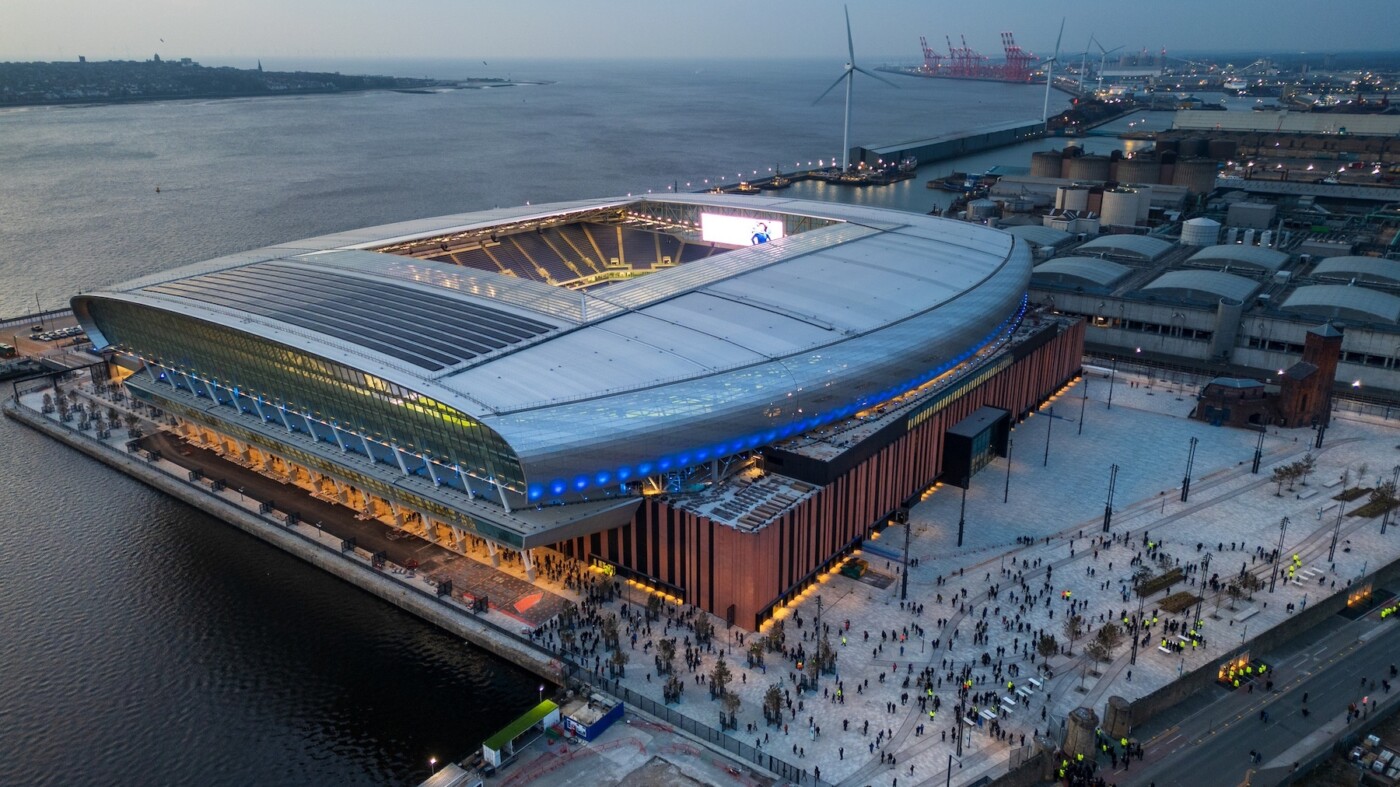
Set within the historic Bramley-Moore Dock on Liverpool's waterfront, Hill Dickinson Stadium is part of one of the city's most significant regeneration projects. Built within a former dock and framed by a retained listed dock wall, the stadium sits within a site defined by industrial heritage and civic ambition.
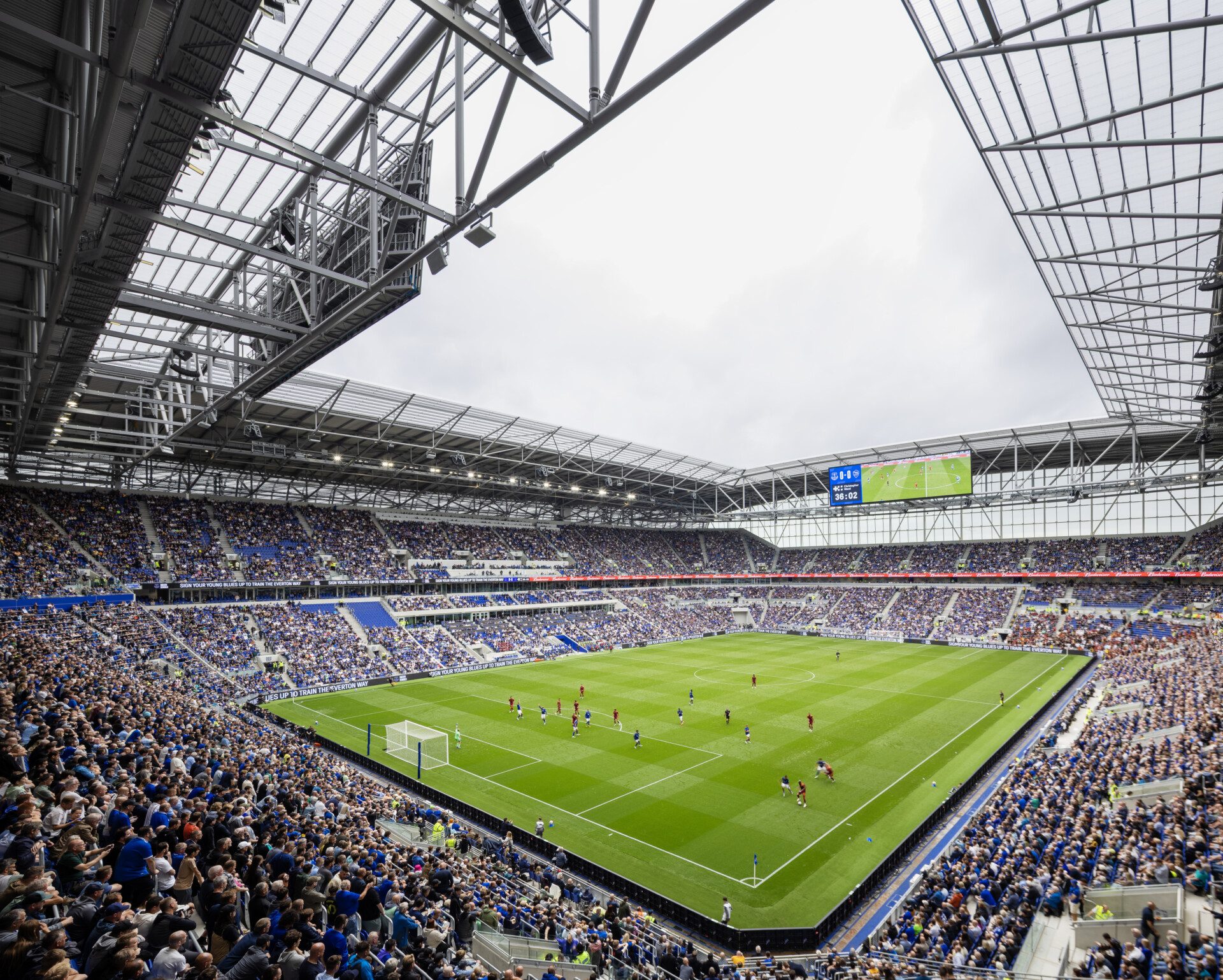
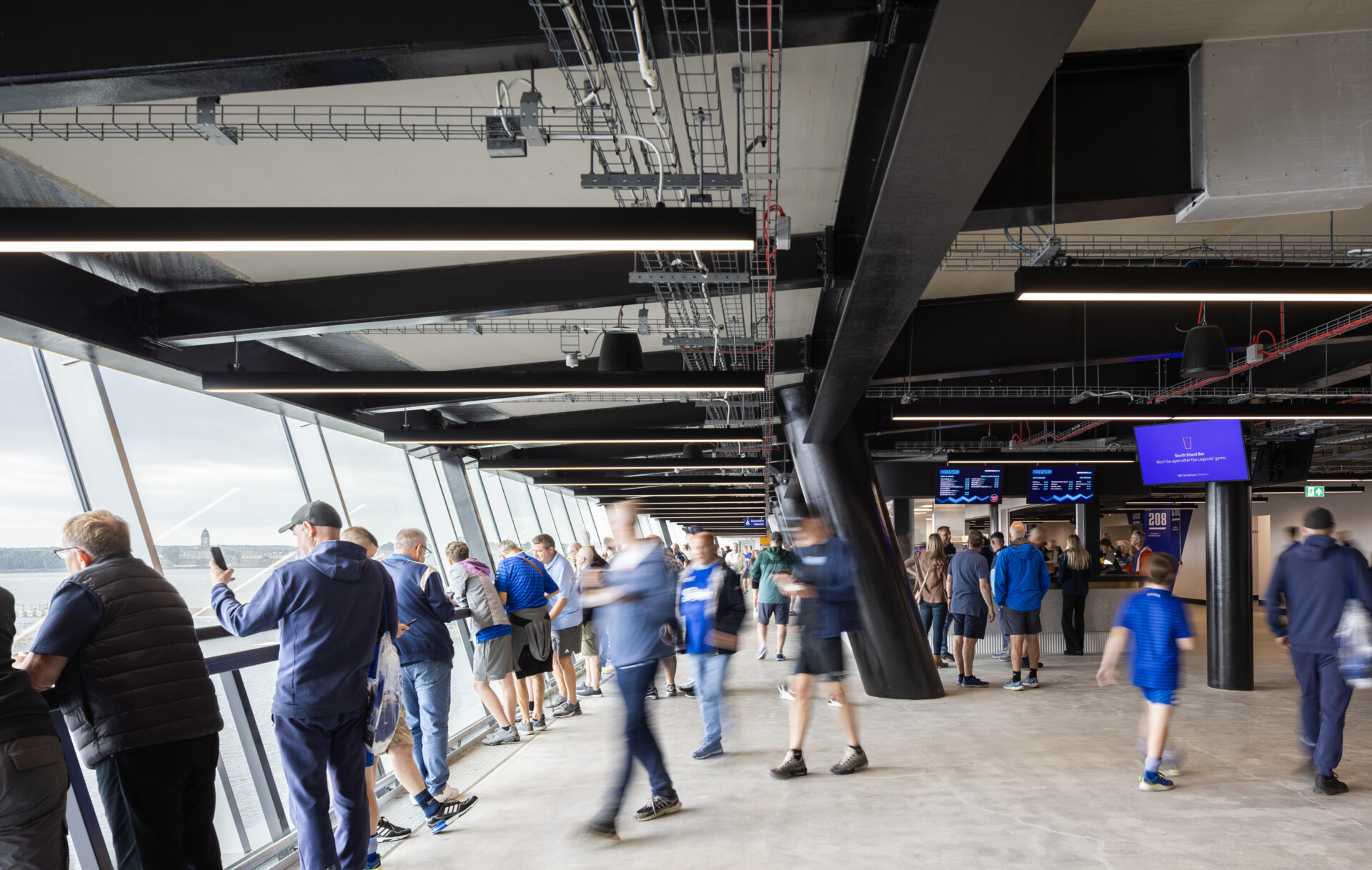
Designed for a 52,769 capacity crowd, the challenge was to create a wayfinding experience that balanced operational efficiency with club identity. The system needed to provide immediate clarity across entrances, multiple concourses and tiered seating within a high-density and time-sensitive environment.
At the same time, the wayfinding strategy needed to support a broader matchday experience, encouraging fans to dwell longer and enjoy hospitality and retail destinations before and after kick-off.
Working with BDP Pattern, Endpoint developed a wayfinding strategy shaped around a clear ambition: helping fans move seamlessly from street to seat.
At the heart of the system is a clear coding structure of numbers and letters, aligned across ticketing, entrances, concourses and seating to create a consistent journey through the stadium.
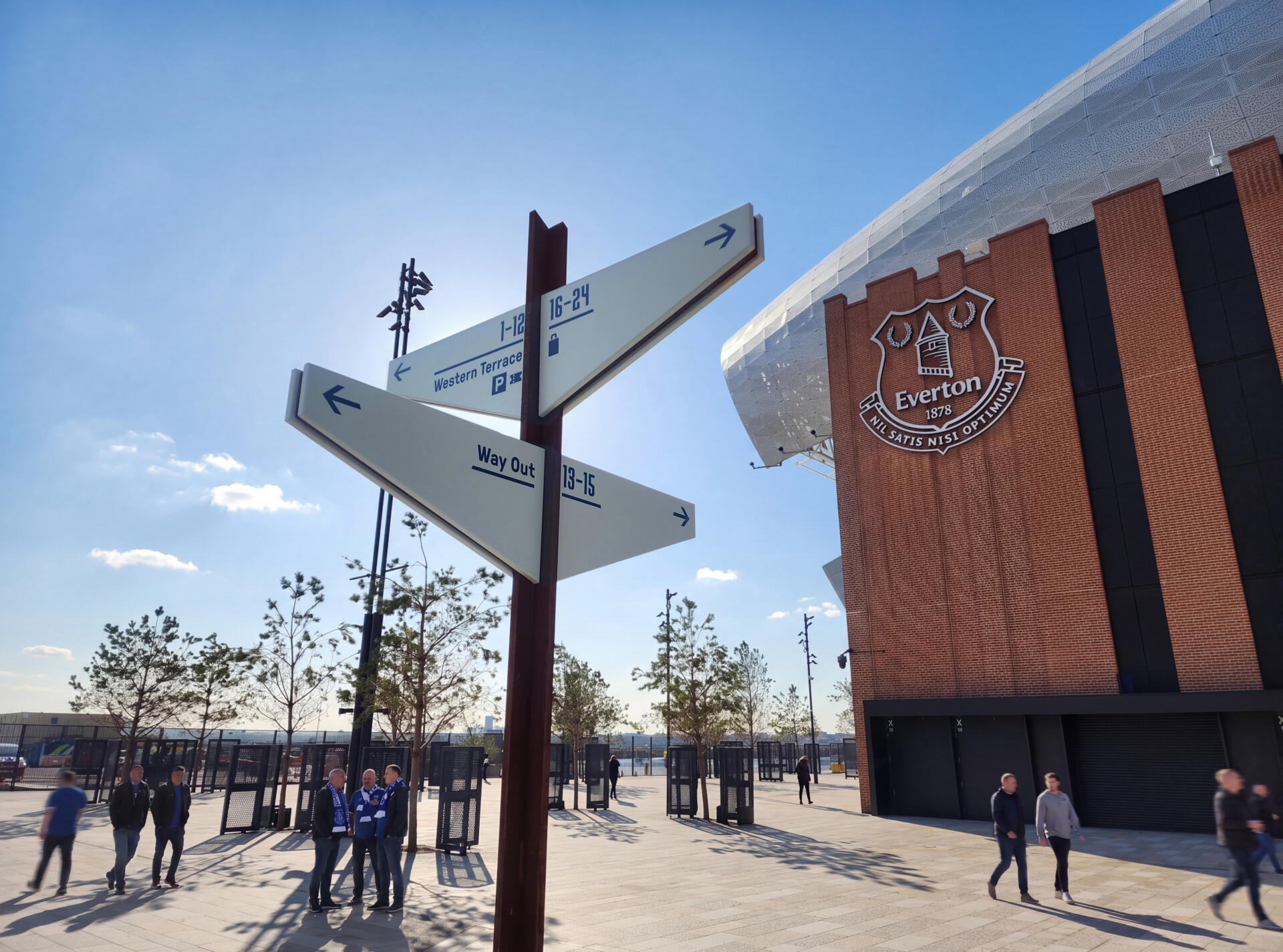
The site itself shaped the approach. Bound by water on one side and a listed dock wall on the other, access into the stadium is limited to a series of defined openings. Entry points were coded and linked with ticket information to support crowd flow and reduce congestion.
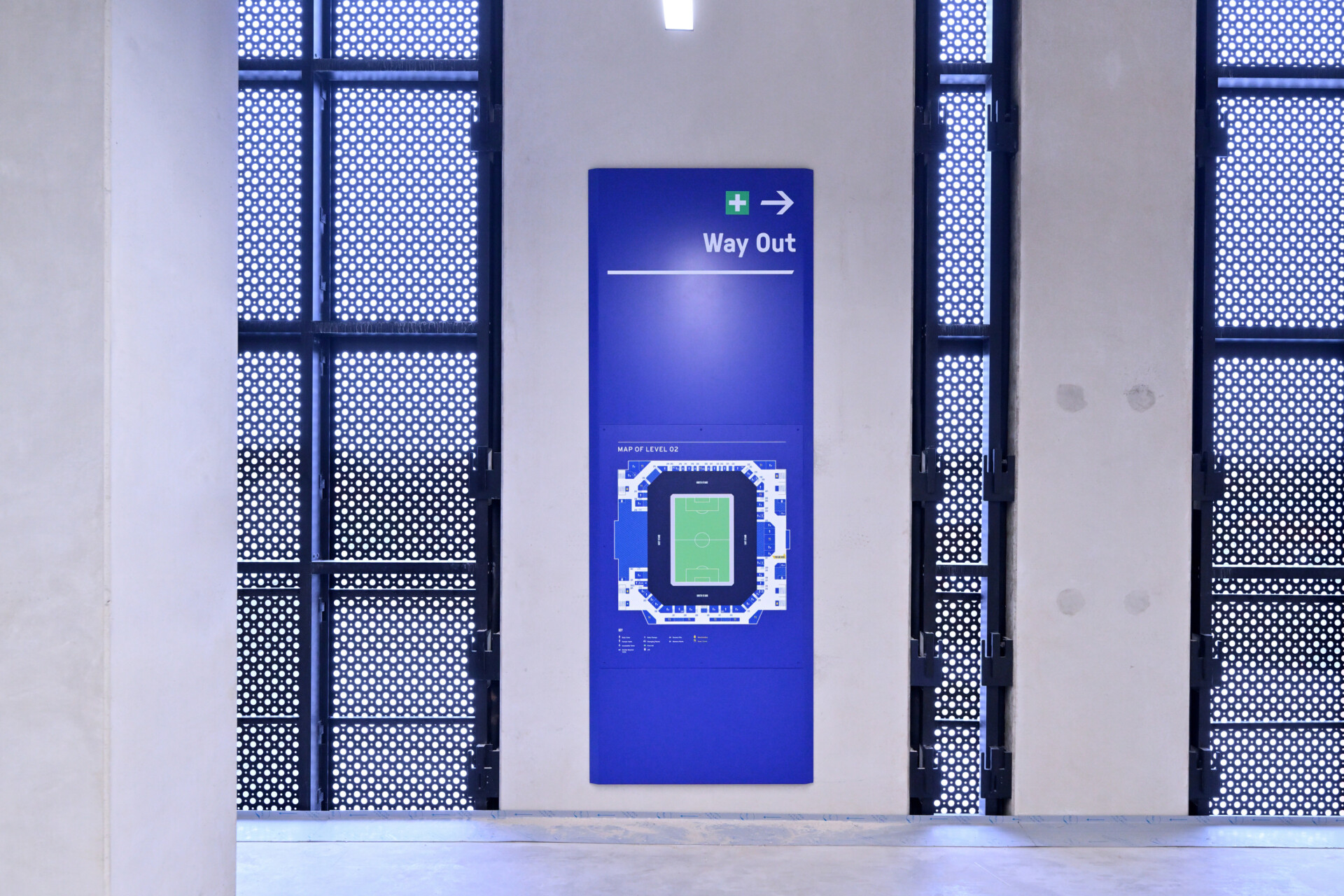
Information is delivered in layers. Suspended signage provides clear direction above crowd level, while maps were strategically positioned throughout concourses to support navigation at key decision points.
Inspired by heritage, shaped by club identity
The design language draws from two defining influences: the industrial heritage of Bramley-Moore Dock and the legacy of Goodison Park.
Externally the wayfinding signage responds to its waterfront setting. Totems and fingerposts take cues from dock infrastructure, with exposed structural forms and a central cruciform support inspired by the steelwork and machinery of the site.
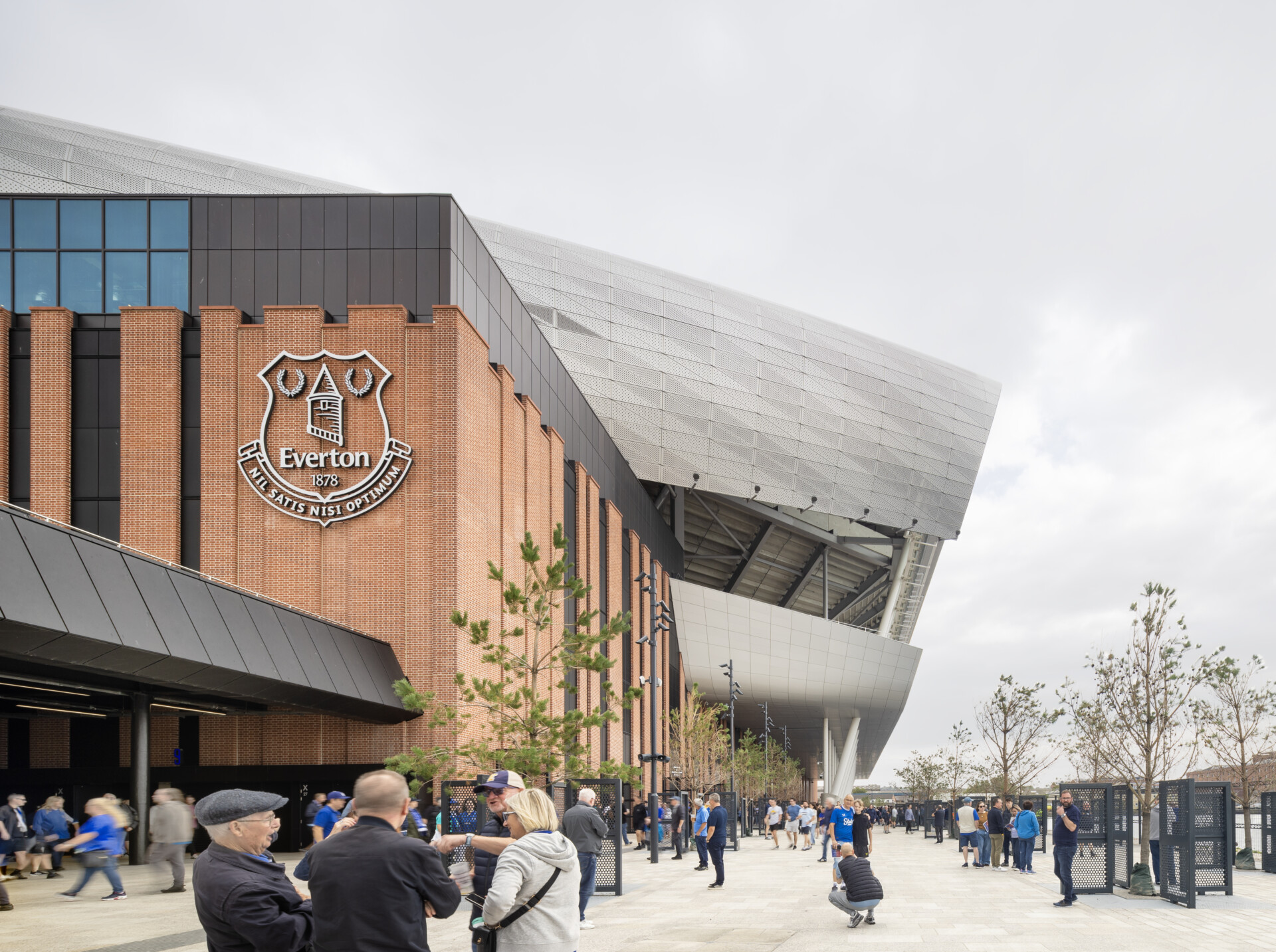
The geometry of Goodison Park's iconic Leitch truss informed physical structures and graphic elements throughout the scheme, creating continuity between old and new. Familiar details, including illuminated blue turnstile numbers and stencil-inspired floor markings, reinterpret recognisable elements of Goodison Park within a modern environment.
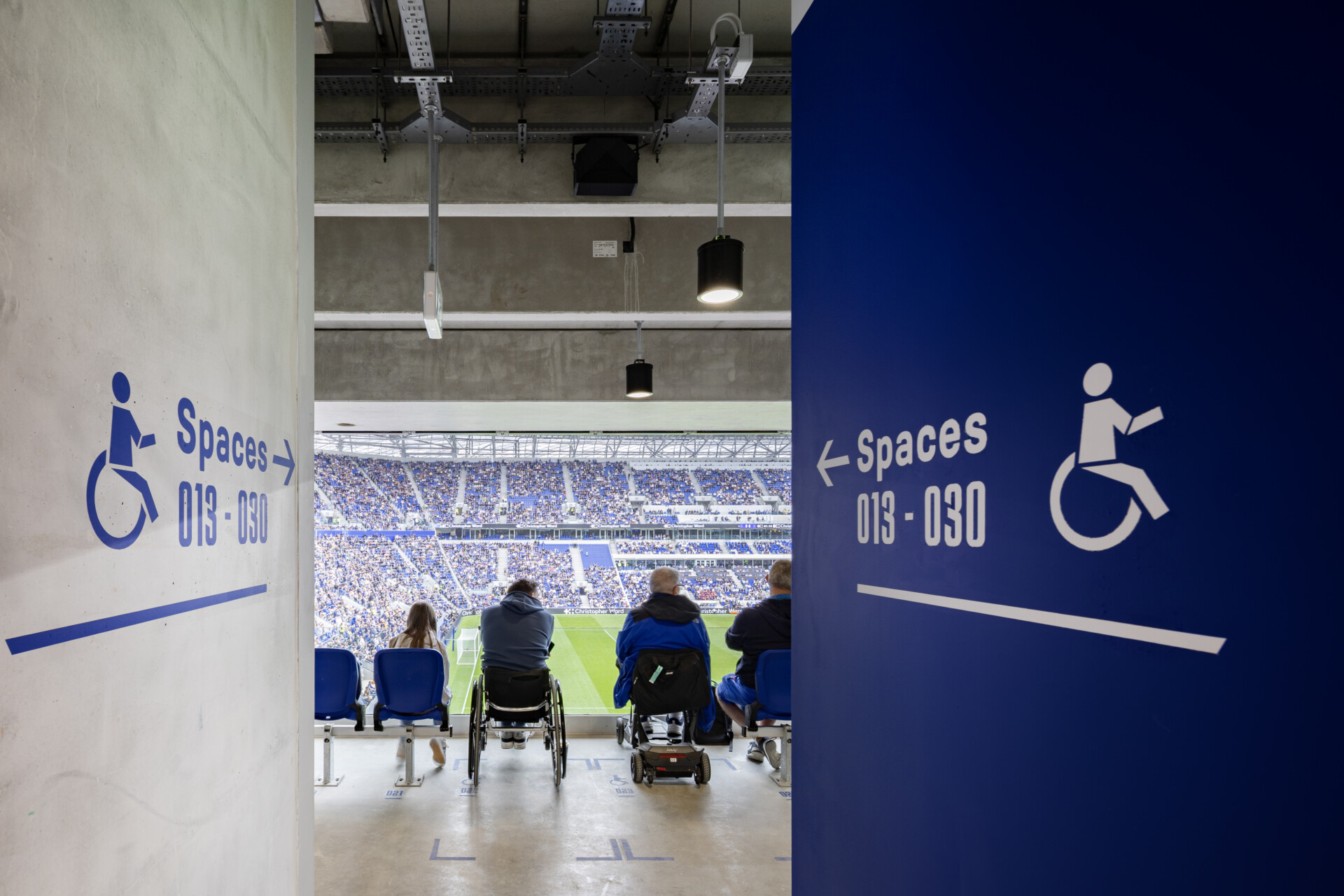
Accessibility was embedded throughout, with strong contrast, clear information hierarchies, large-scale typography and clearly signposted sensory spaces.

A wayfinding scheme for a new chapter
At Hill Dickinson Stadium, the wayfinding scheme supports confident movement through a complex venue, helping tens of thousands of supporters navigate the matchday experience.
Beyond navigation, the project plays a meaningful role in shaping the emotional experience of the stadium. By responding to the unique dockside setting while carrying familiar references from Goodison Park into the experience, the wayfinding design creates continuity during a period of major change.
The result is a stadium that feels both operationally seamless, and unmistakably Everton.
Hero photography: © Everton FC