
Wayfinding strategy for a new innovation district
For Endpoint, the challenge wasn't simply helping people find their destination. It was creating a wayfinding strategy that would make a brand-new district feel connected to the city from the day it opened. Equally importantly, it needed to provide a flexible framework that could evolve as the masterplan continues to take shape.
Working closely with Stanhope and the wider project team, we developed a district-wide wayfinding strategy, naming framework and signage system that supports movement, strengthens a sense of place and provides a lasting framework for one of the UK's most ambitious innovation districts.
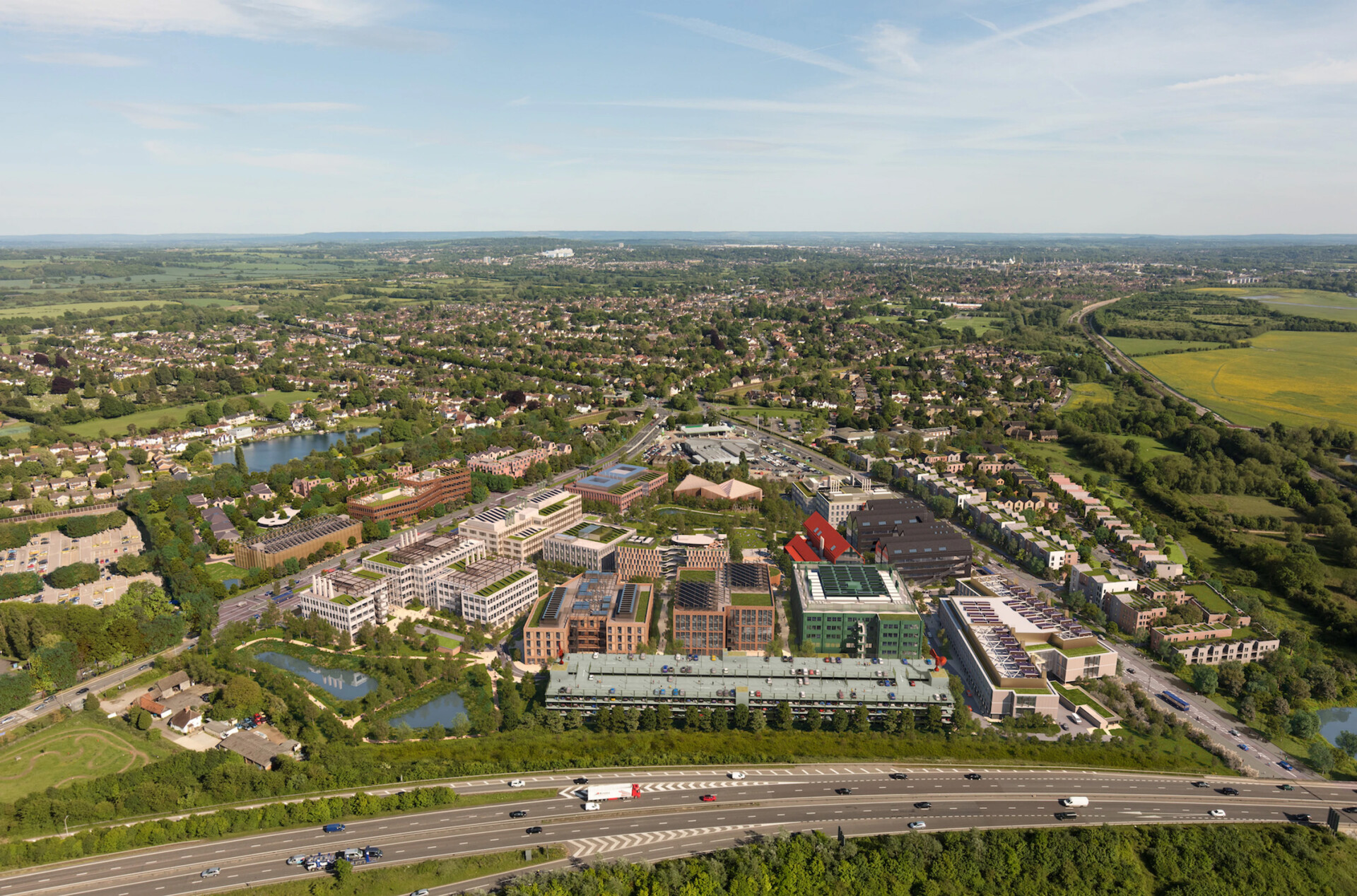
Starting with movement
Oxford North has been designed around movement. Walking and cycling are prioritised, public spaces encourage interaction, and laboratories, workplaces and amenities are connected through a landscape that supports collaboration.
Our strategy began by understanding how people would arrive and move through the district. We mapped journeys by train, shuttle bus, cycleways, car and on-foot, creating a wayfinding strategy that supports Oxford North's ambition to prioritise lower-carbon travel and make movement across the district feel intuitive.
Alongside the physical wayfinding scheme, we developed a naming and addressing strategy for the entire masterplan, creating a consistent framework for streets, buildings and destinations that can support future phases without compromising clarity.
"Endpoint brought a strategic approach to wayfinding design that went beyond signage, shaping an intuitive, estate-wide experience that supports how people move and connect across the district."

Inspired by Oxford
A key ambition was for Oxford North to feel like an extension of the city, rather than a separate destination.
That thinking shaped every design decision.
We developed an intentionally unbranded wayfinding scheme with its own visual identity, allowing it to feel welcoming, enduring and closely connected to its surroundings.
The visual language was inspired by Oxford's botanical heritage, through a high-contract serif typeface and botanical illustrations we commissioned by local artist Ali Walsingham, creating subtle connections to the city's longstanding relationship with plant science.
That same thinking shaped the physical design. Freestanding glass signs with bespoke frosted gradients allow planting, light and movement to remain visible through the structures, helping the signage to become part of the landscape.
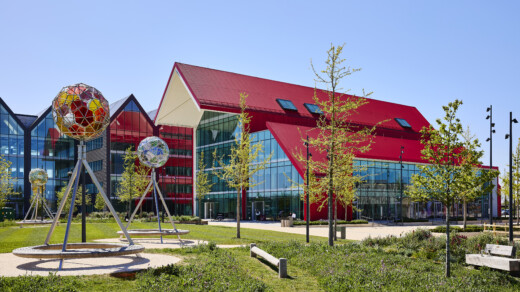
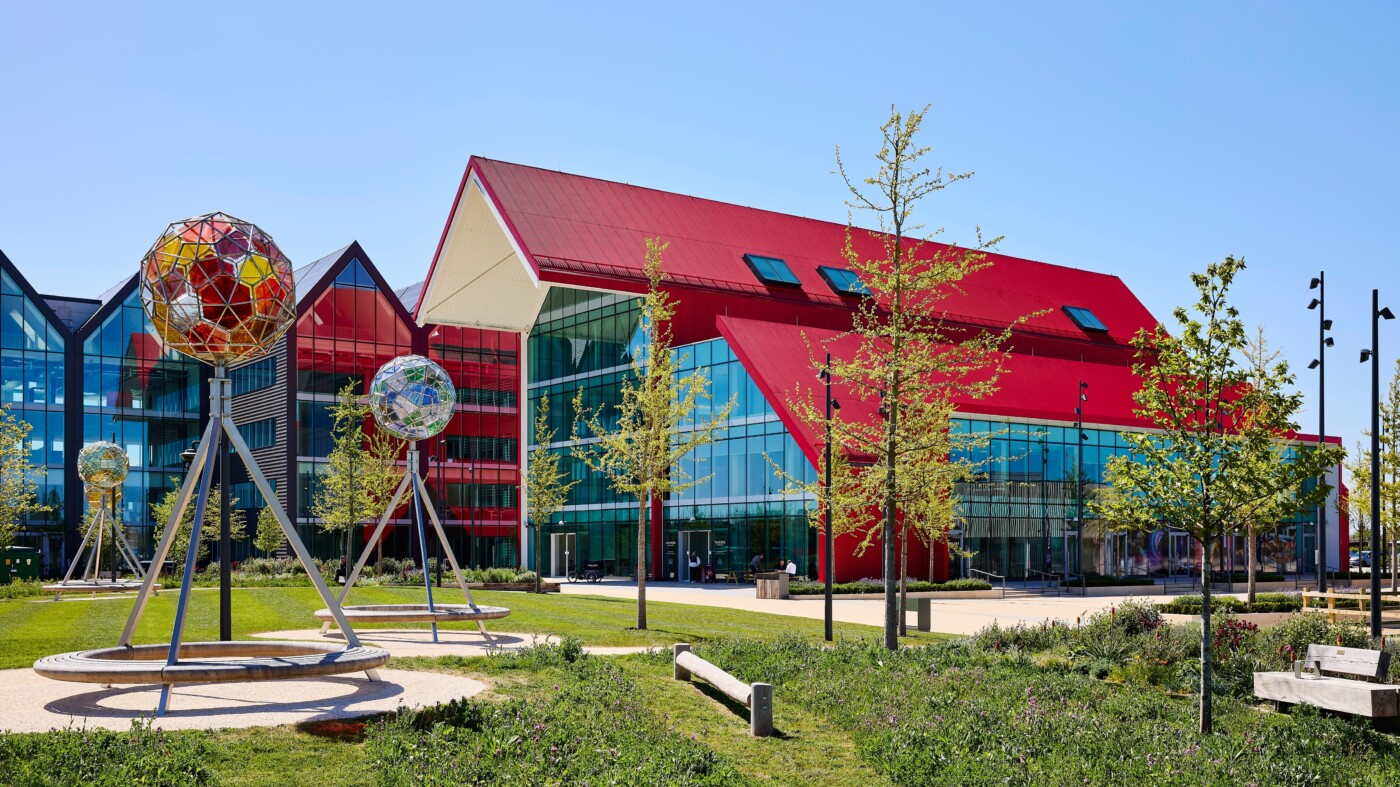
Accessibility is embedded throughout, with tactile signage and a modular three-dimensional map developed in collaboration with accessibility consultants. Braille interpretation was also incorporated for Olafur Eliasson's 'Your planetary assembly' artwork, ensuring it could be experienced by more visitors.


Designed to grow
Because Oxford North is still evolving, flexibility was built into the wayfinding design from the outset.
We created a framework for the completed masterplan, with modular maps and adaptable directional graphics designed to be updated as new phases are introduced. This extends the lifespan of the design, reduces future maintenance and allows the district to grow without losing consistency.
The result is a wayfinding system that does more than help people find their destination. It creates a sense of place, supports movement across an emerging district and provides a flexible framework that can grow alongside one of the UK's most ambitious science and innovation developments.
Photography by Marcus Ginns