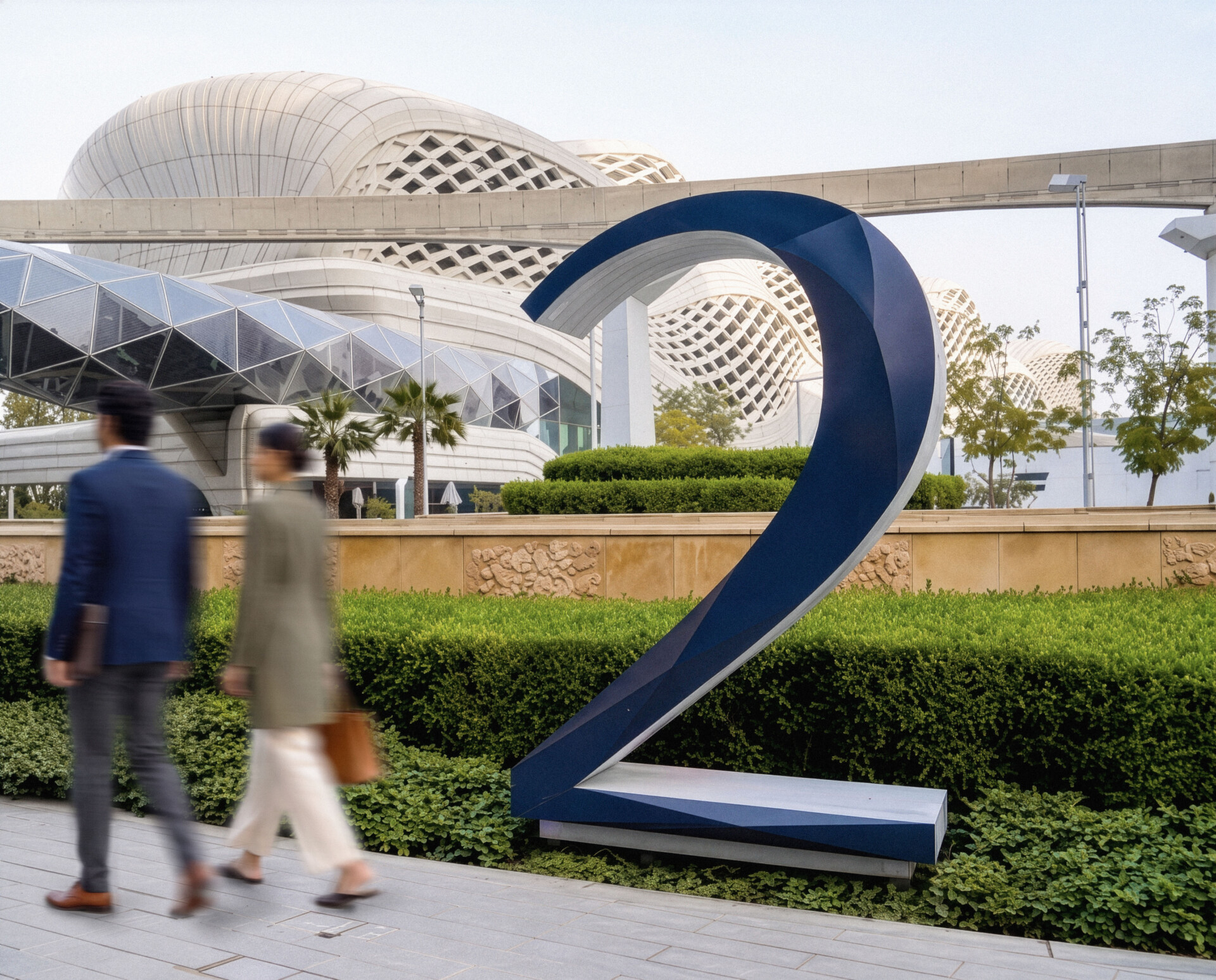
Simplifying a complex urban environment
Endpoint designed and delivered an integrated wayfinding system that combines physical signage, digital navigation, mapping and placemaking to create a cohesive experience across the district.
With 95 buildings encompassing commercial offices, residences, hospitality, retail and public spaces, KAFD operates at the scale and complexity of a city rather than a conventional mixed-use development. Designed as a transit-oriented district, it connects three metro lines and supports a ‘10-minute city’ system through an extensive pedestrian network, including 42 climate-controlled skywalks that allow people to move between buildings without returning to street level – one of the district’s defining features and a response to Riyadh’s climate.
This created a uniquely complex environment. The challenge was to create a wayfinding solution that made this layered urban landscape intuitive to navigate while reinforcing KAFD’s distinctive architectural character and premium identity.
Creating clarity through design
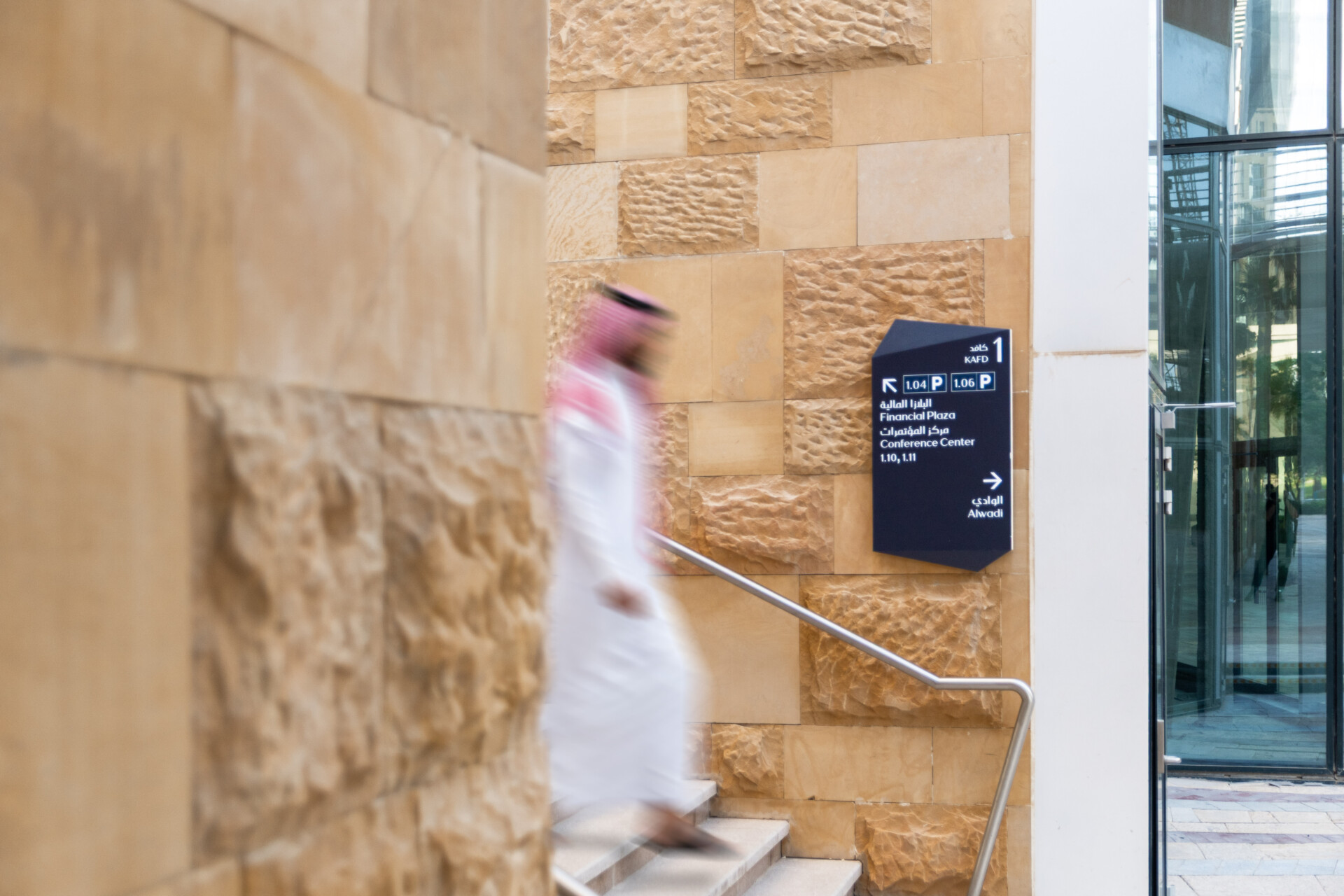
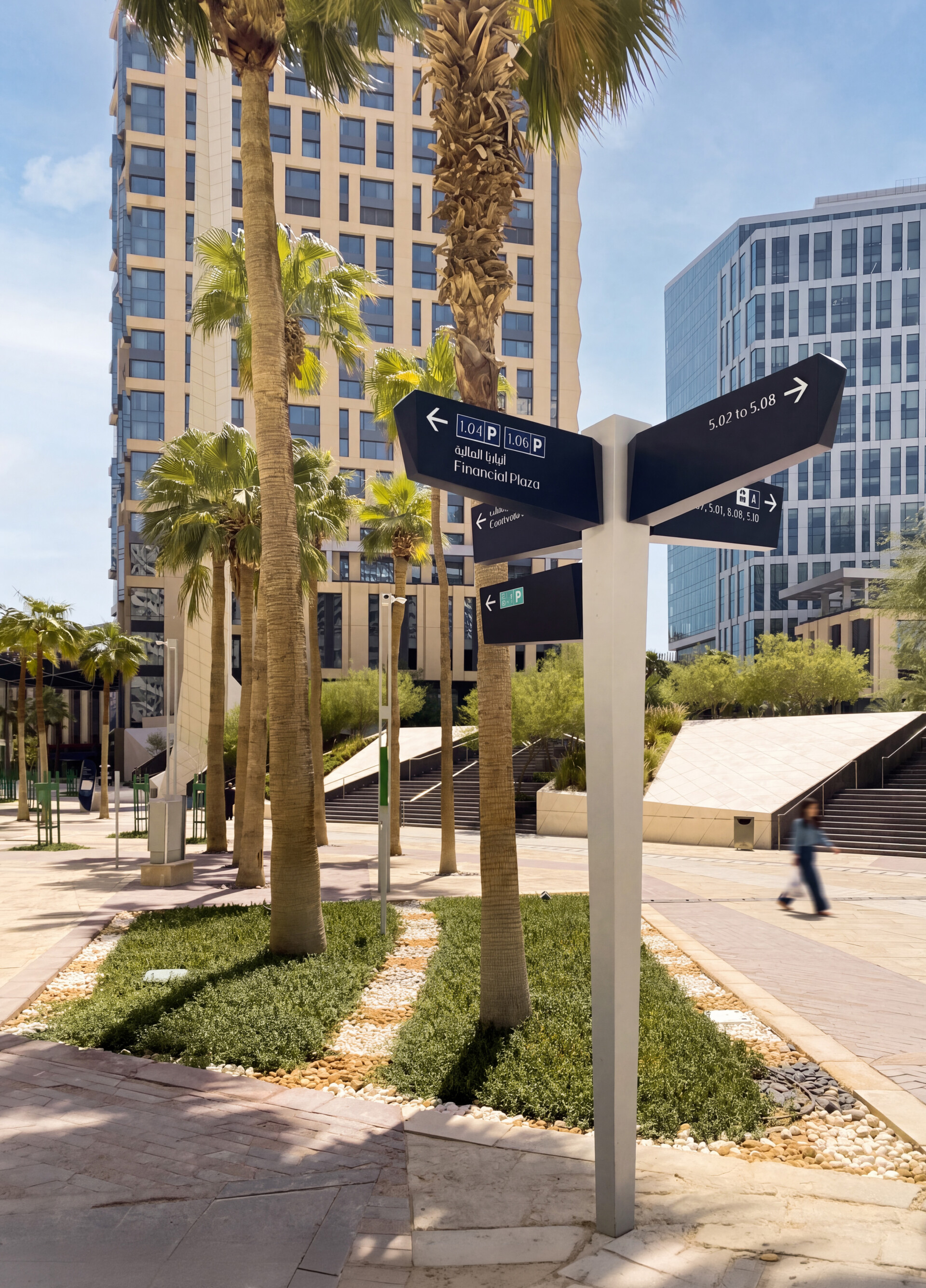
Rather than treating signage as a collection of individual elements, Endpoint designed an integrated wayfinding system that helps people build a clear mental model of KAFD. Inspired by the district's distinctive architecture, the design language creates a contemporary family of elements that balances clarity, identity and a strong sense of place.
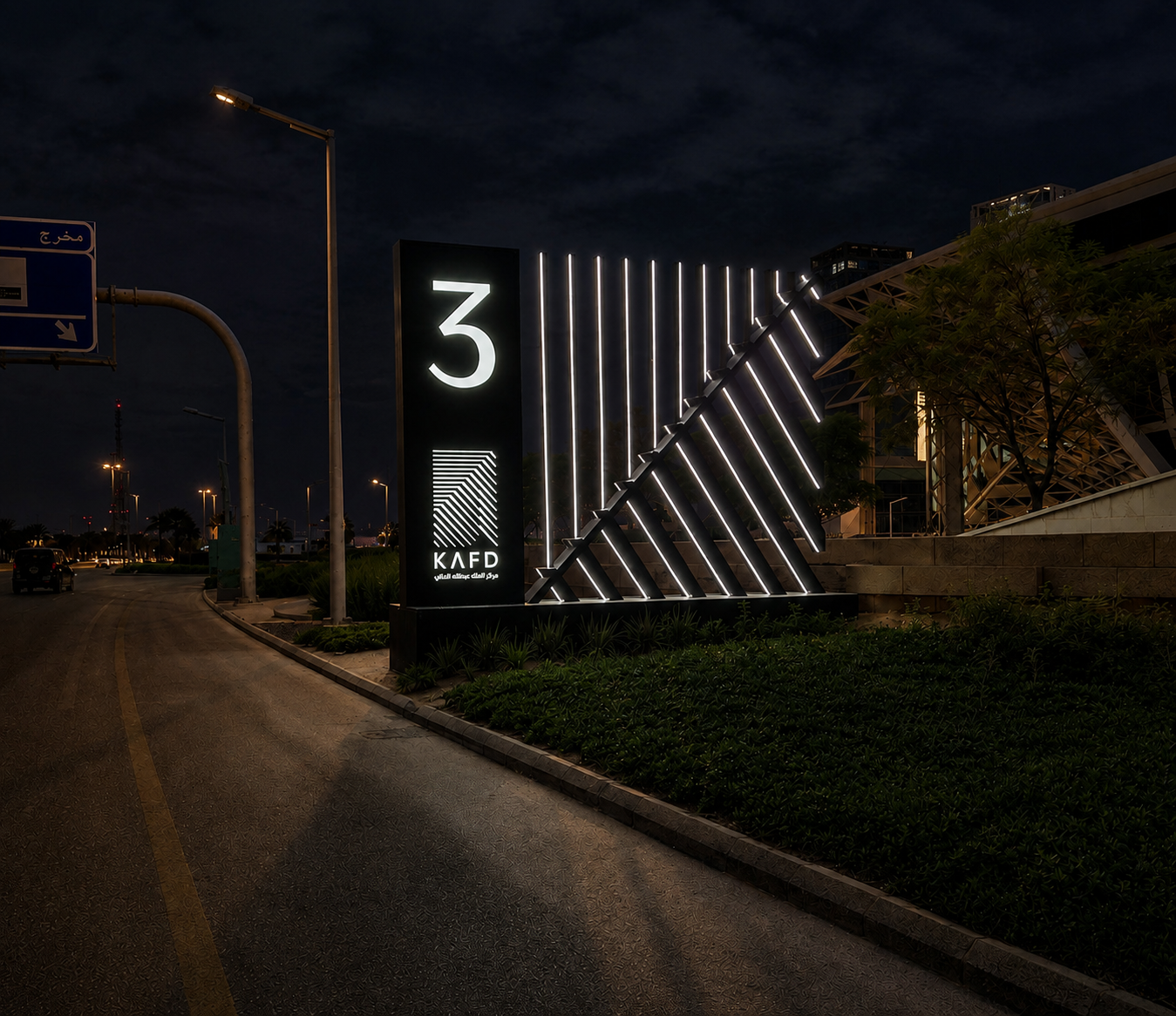
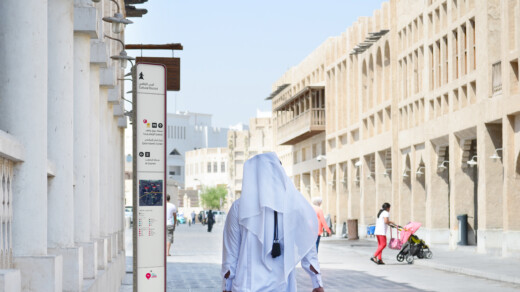
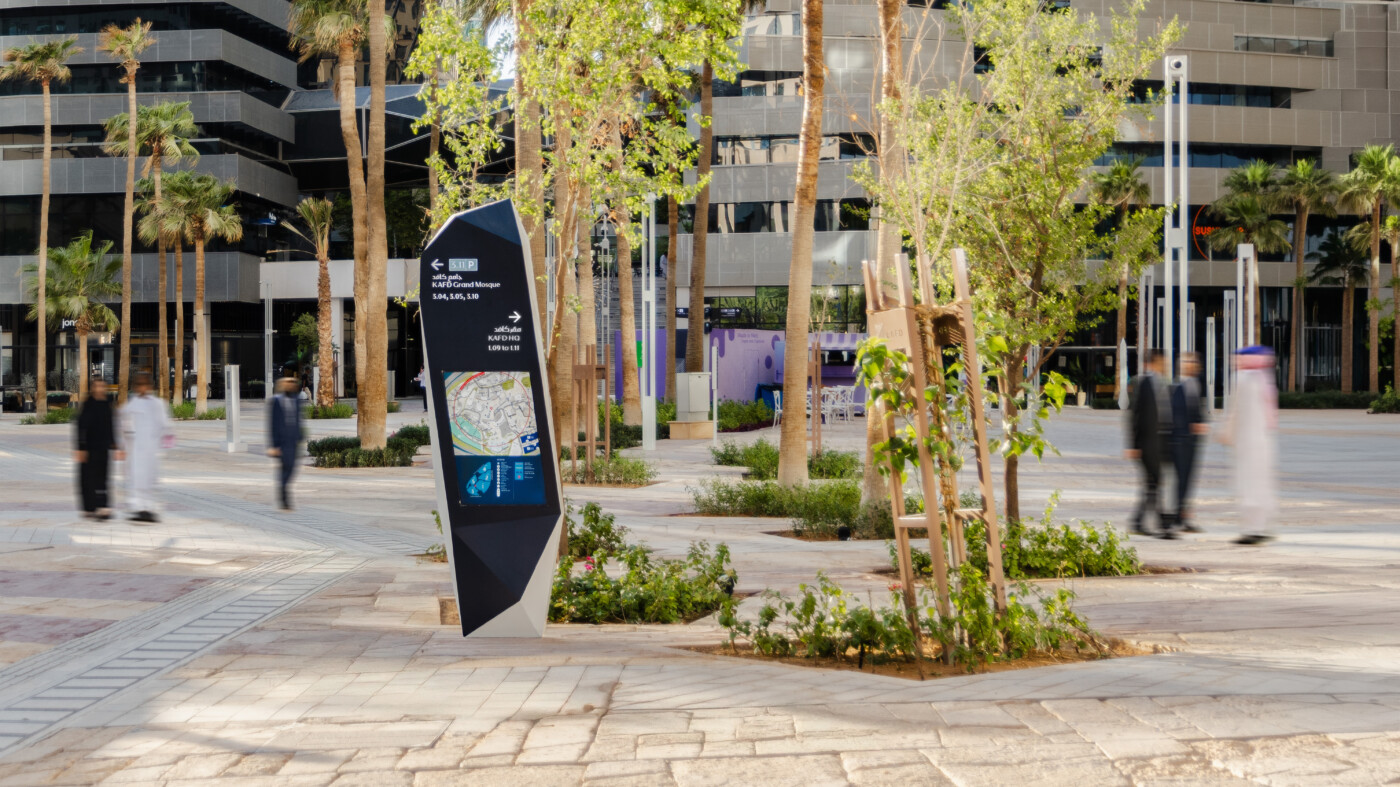
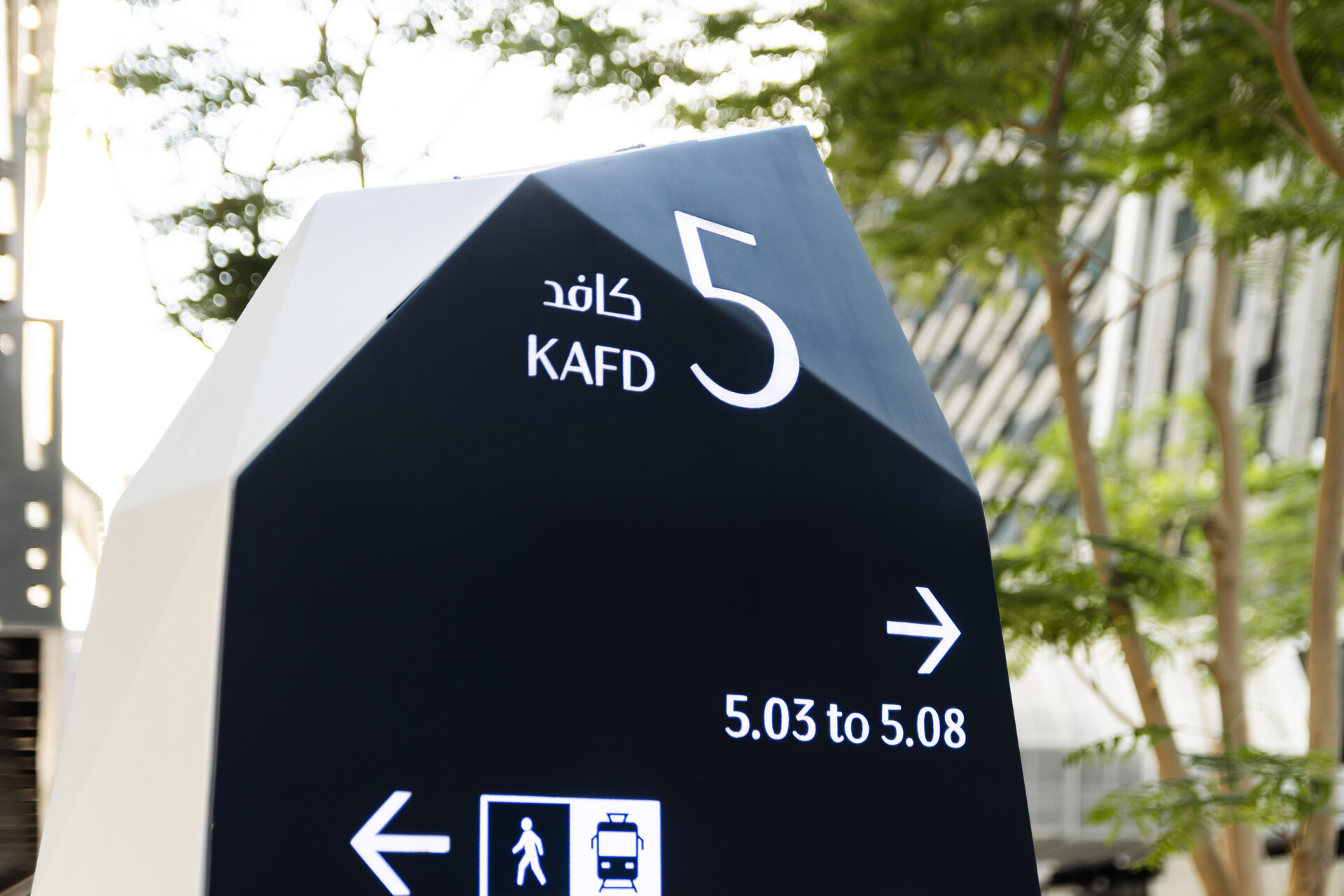
Custom-designed zone identifiers establish memorable landmarks throughout the development, while pedestrian and vehicular signage creates a consistent visual language that echoes KAFD's bold architectural forms.
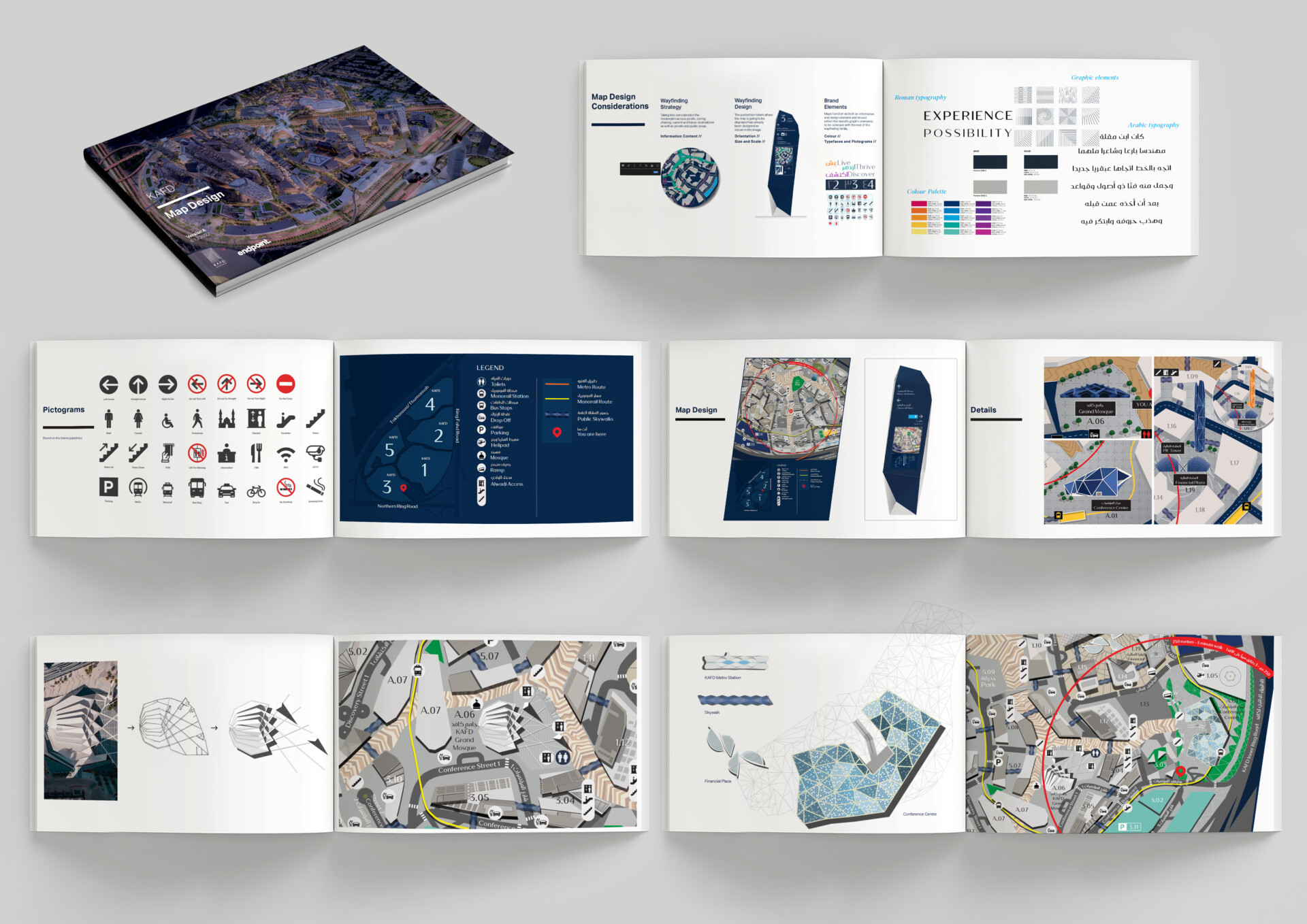
Recognising that visitors require different information at different stages of their journey, Endpoint developed a layered navigation strategy. Macro maps provide a clear overview of the wider masterplan, while micro maps support decision-making at key locations. Three-dimensional mapping features further simplify the complexity of KAFD's interconnected streets and elevated skywalk network, helping users confidently orient themselves throughout the district.
Designed for performance
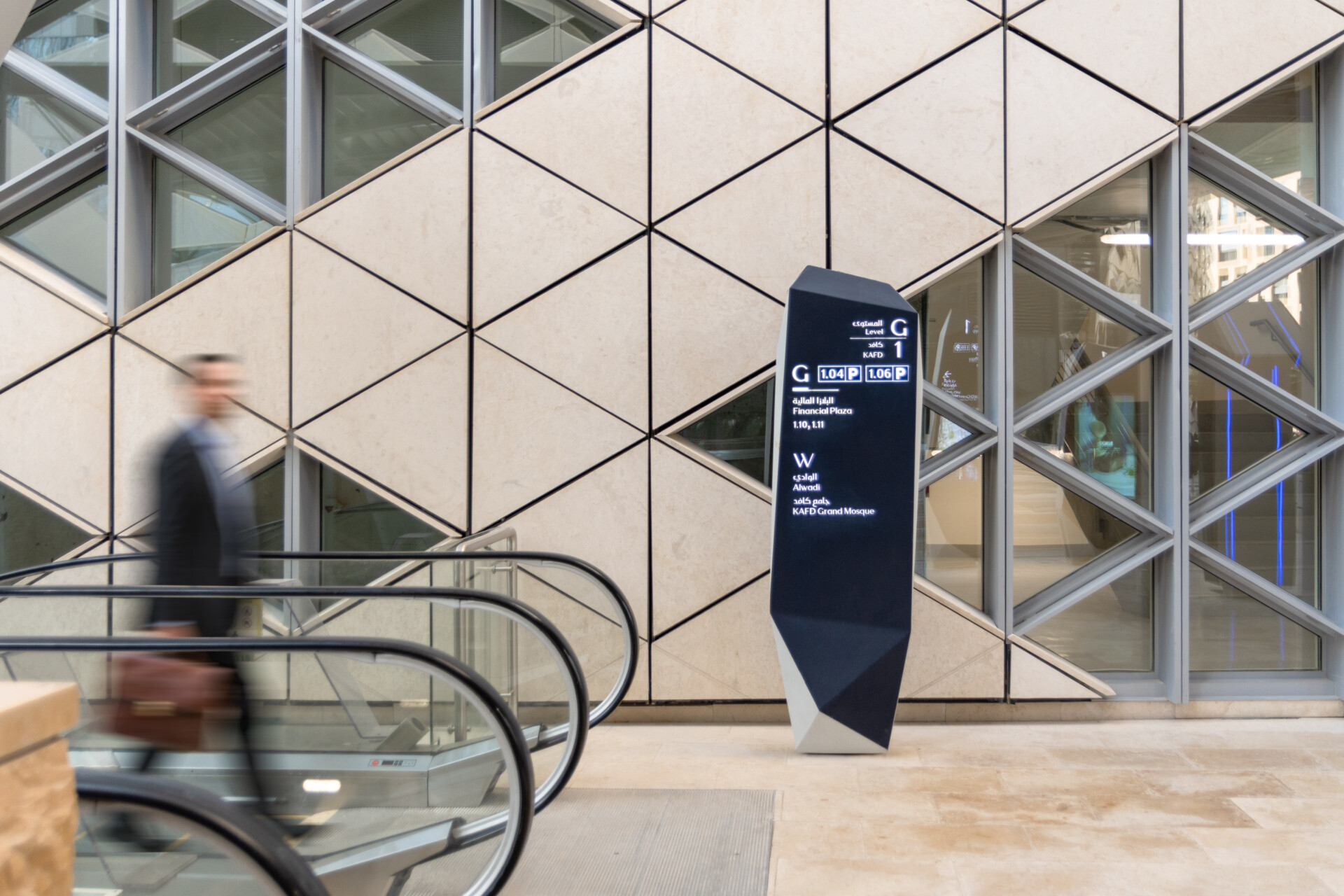
Endpoint designed and supported the installation of more than 18,000 wayfinding elements across the development. Every element was custom engineered to balance performance with design quality. Powder-coated aluminium and moulded fibre-reinforced plastic (FRP) were selected for their durability in Riyadh’s climate and ease of fabrication. Sign panels were designed to open easily for servicing while concealing all joints and fasteners to provide a homogenous look.
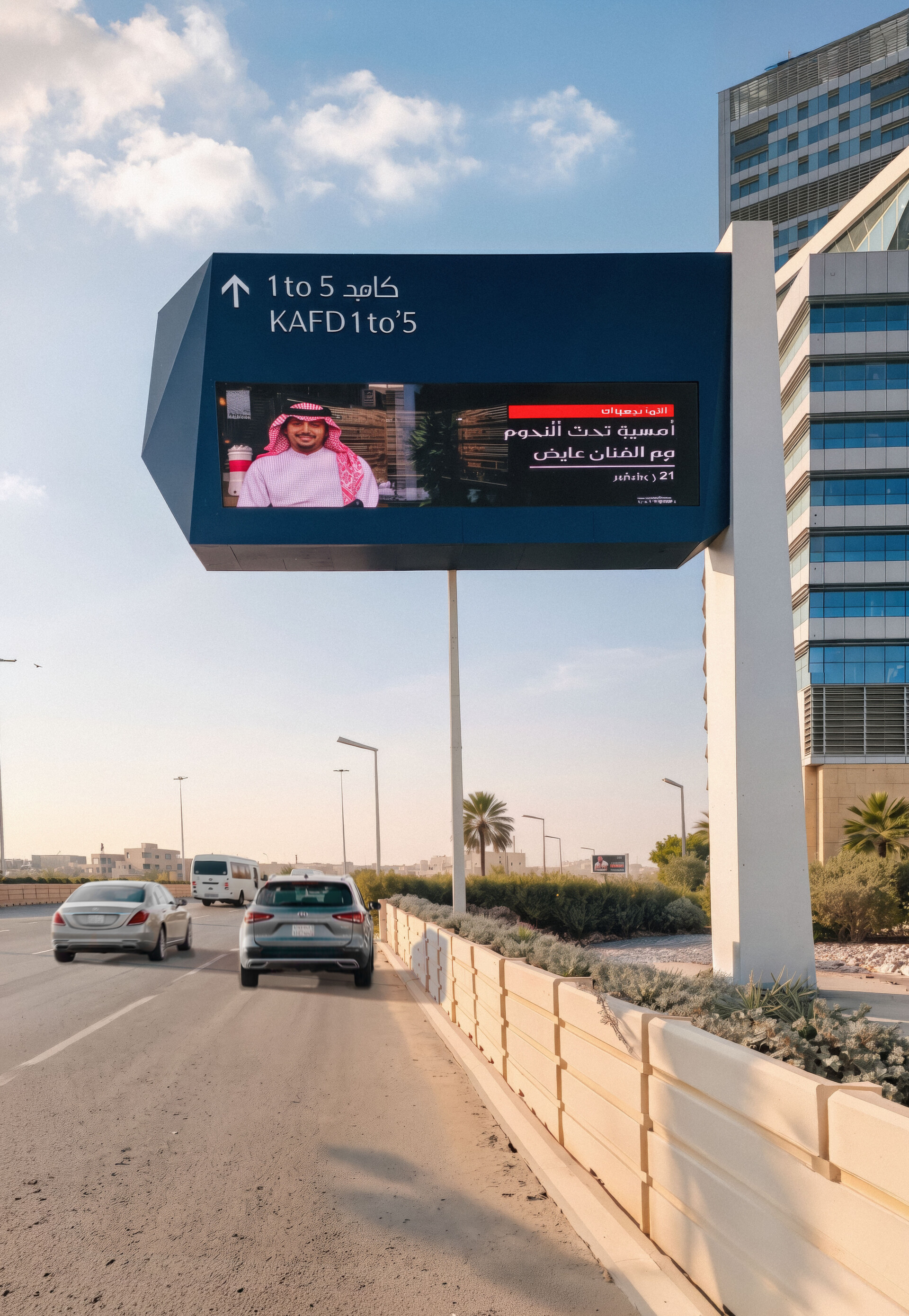
Large cantilever and gantry signs with customised digital displays were sat precisely along the district’s main roadways, providing drivers with live information on events and parking availability. As some of these signs were located along public roads, they were carefully designed with due consideration for MOT Saudi Highway Code requirements regarding text height and sizing, while preserving KAFD’s distinctive visual identity.
Illuminated totems, fingerposts, and placemaking features were carefully coordinated with infrastructure, and parking management systems were seamlessly integrated into the wayfinding experience to create a consistent journey from arrival to departure.
A navigation system fit for the future
Beyond the physical solution, Endpoint developed a digital navigation experience that enhances how people interact with KAFD, creating a more responsive and efficient journey while helping visitors make the most of everything the district has to offer.
Designed to evolve alongside KAFD, the system provides a lasting framework for movement, connection and discovery, helping residents, commuters and visitors navigate a city-scale destination with confidence.